I Went to COMPUTEX 2026. Here's What Actually Stood Out.
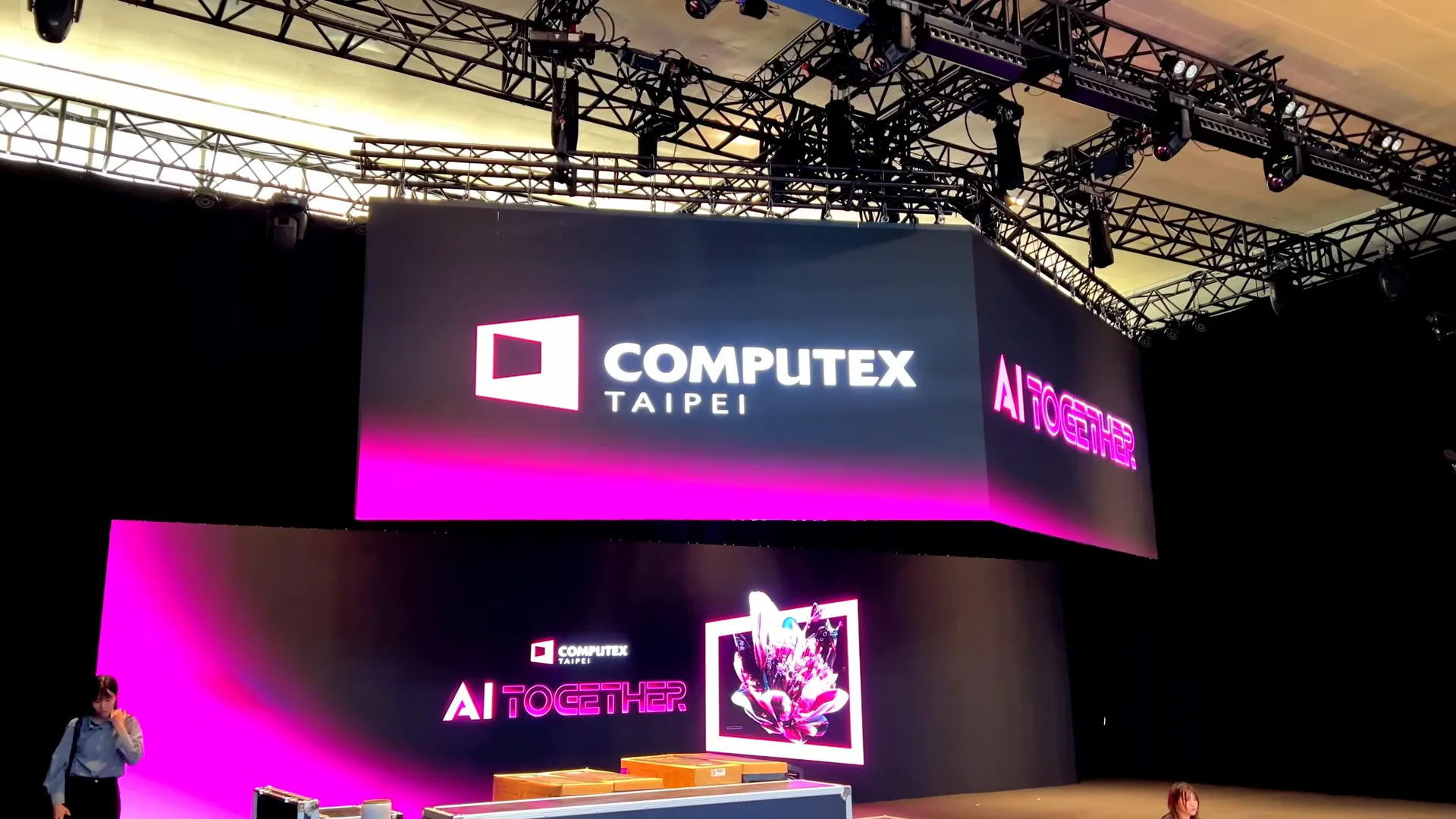
COMPUTEX 2026 was my first hardware show at this scale, and I went in expecting AI to be a major theme. That part was obvious before I even landed in Taipei. What I didn’t expect was how completely it had taken over. Every company at the show was telling an AI story.
COMPUTEX 2026 officially ran under the theme “AI Together.” It had 1,500 exhibitors from 33 countries, 6,000 booths, and major categories spanning AI and computing, robotics and mobility, and next-generation hardware. AI was the show.
First COMPUTEX, and why it felt different
This was my first time in Taiwan and my first time at COMPUTEX.
I expected it to be large. I didn’t fully understand what that meant until I was walking the halls. The show is spread across multiple buildings at the Nangang Exhibition Center, with different floors and wings focused on gaming, AI computing, networking, components, storage, embedded systems, robotics, startups, and industrial hardware. You can’t casually cover everything. You have to make decisions constantly.
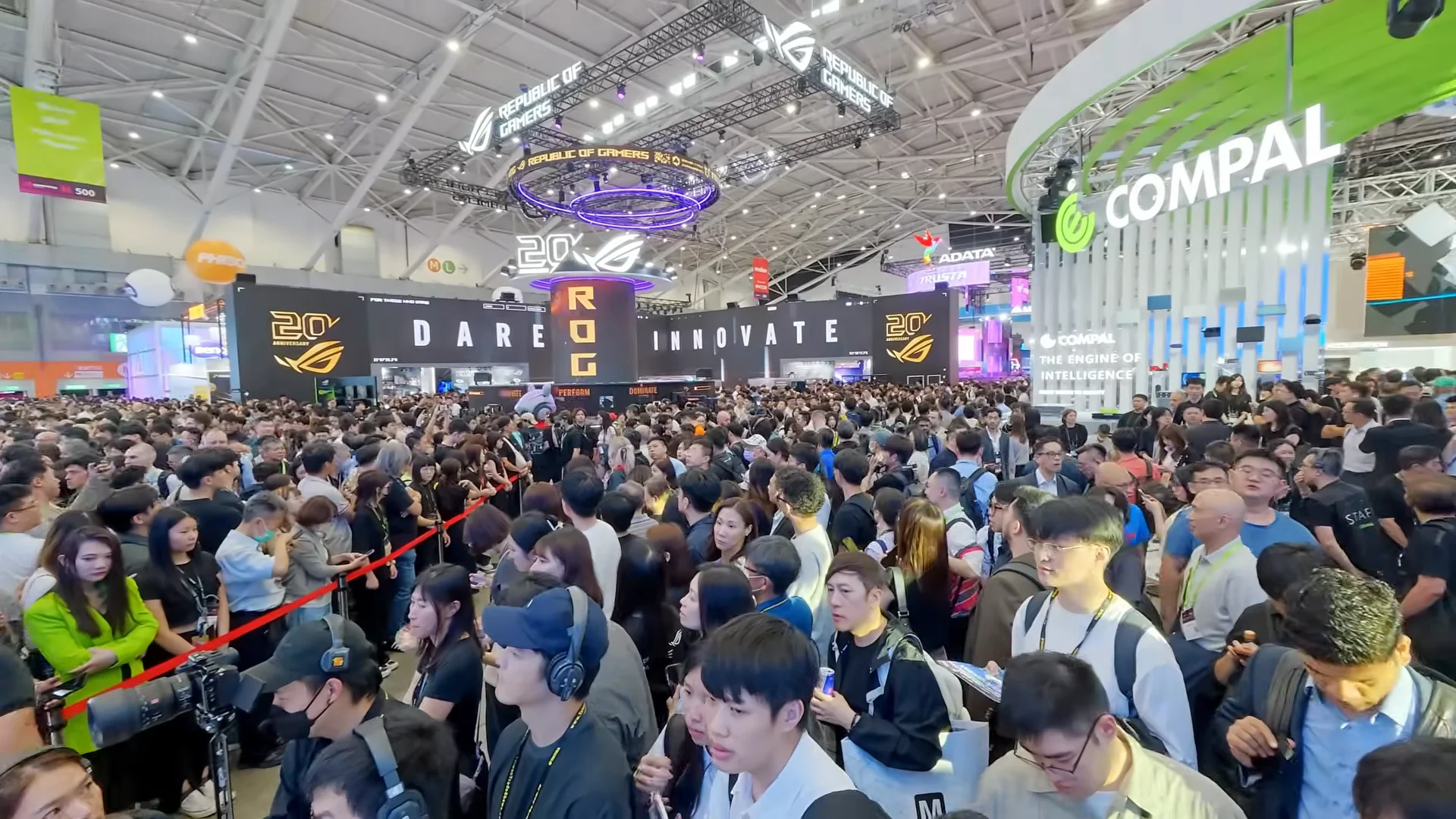 COMPUTEX 2026 show floor at Nangang - 1,500 exhibitors, 6,000 booths, and more to cover than you can realistically see.
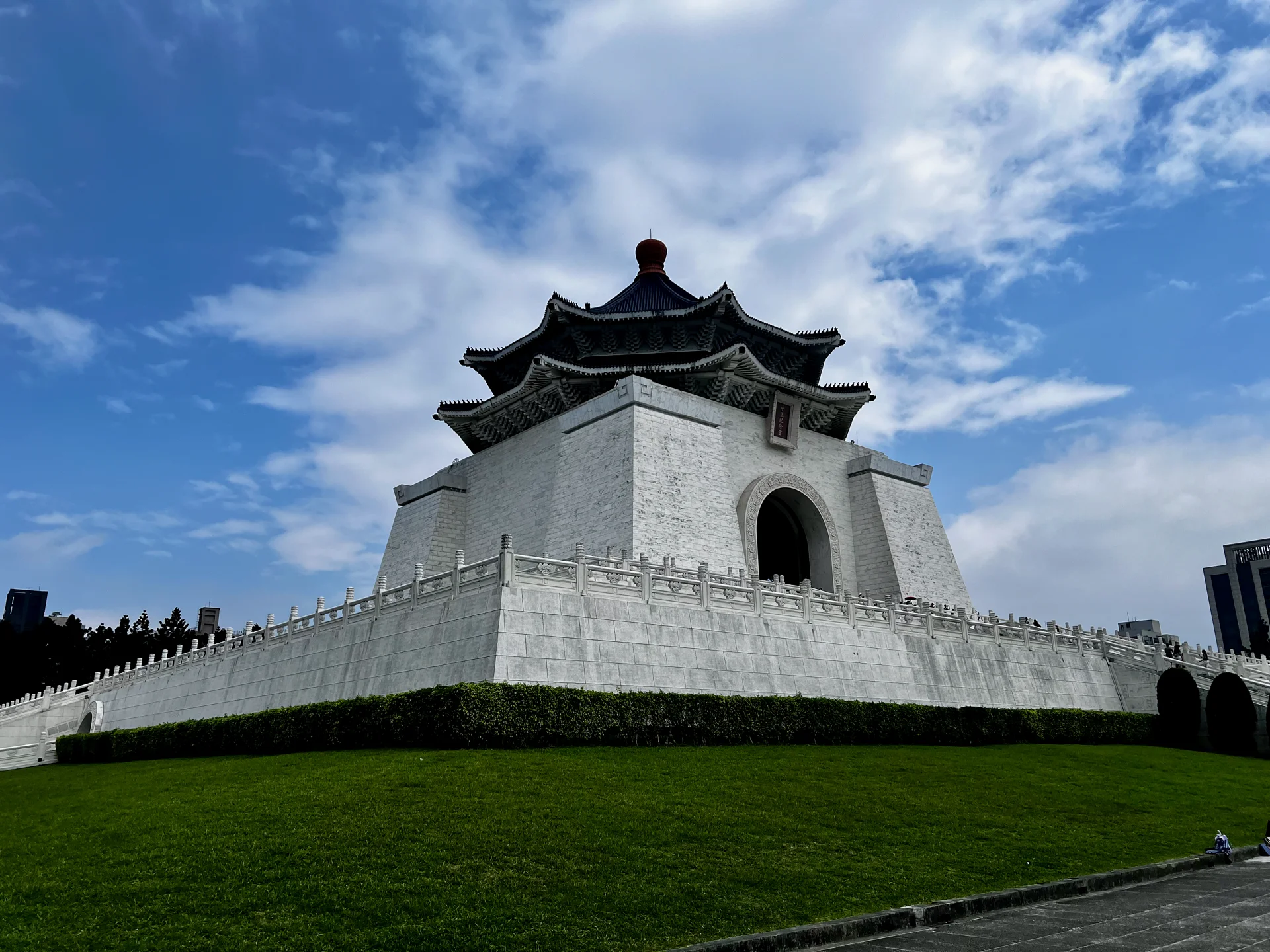
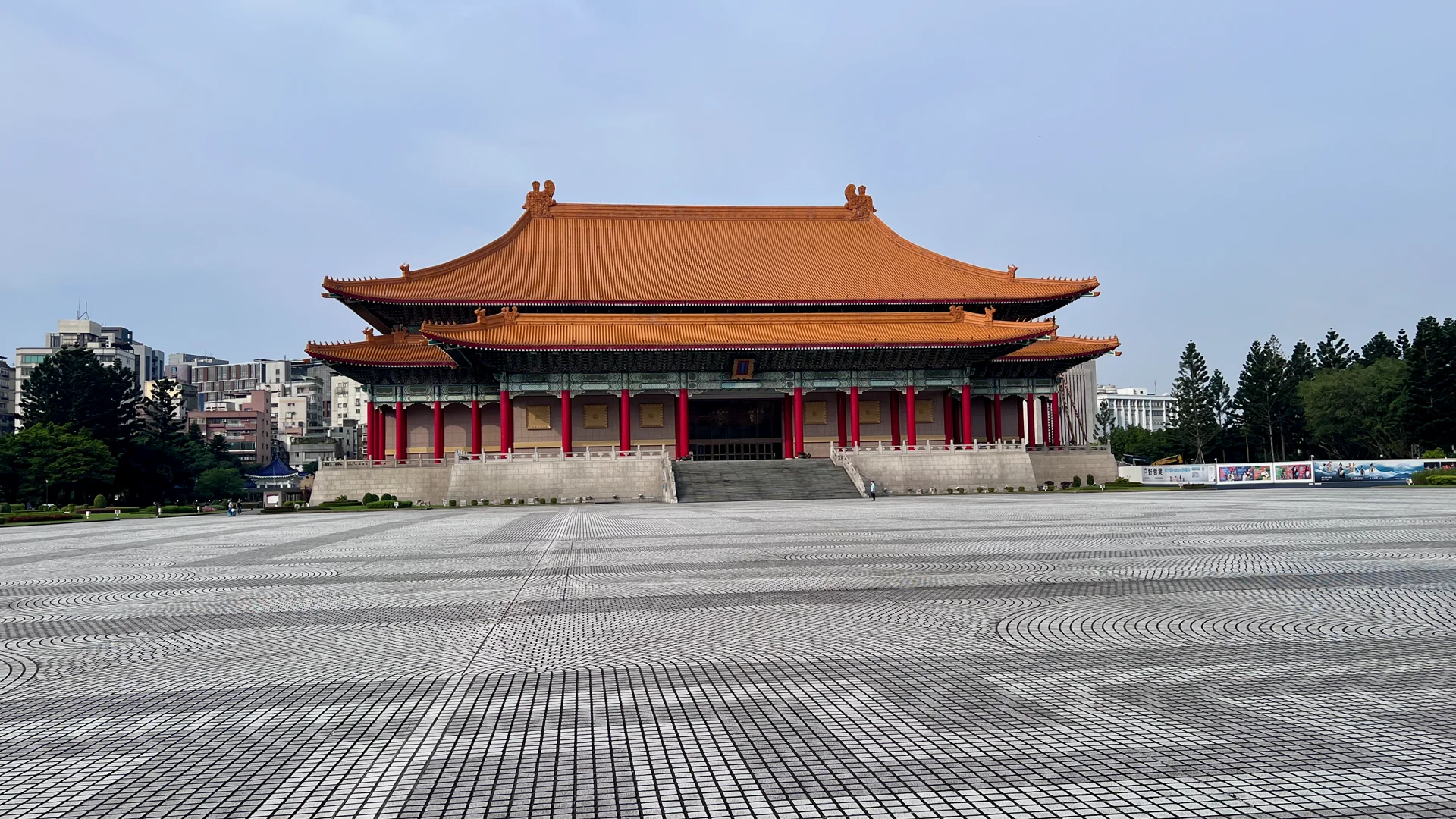
The other thing that stood out was Taipei itself. Going from Minnesota to Taiwan in June is an adjustment - it was hot and humid - but the city is easy to navigate, the food is excellent, and the energy around COMPUTEX was everywhere. It was a good place to host a hardware show.
What made COMPUTEX feel different from software conferences I’ve attended before was the breadth of the supply chain on display. Finished products were there, but so were prototypes, reference designs, industrial systems, cooling vendors, power supplies, AI servers, robotics, storage hardware, mini PCs, and a lot of things that are probably never going to appear on a retail shelf.
That’s both the appeal and the challenge of the show.
AI was the whole show
The biggest takeaway from COMPUTEX 2026: AI has taken over the PC hardware industry, and it’s not just about GPUs.
It was AI infrastructure. AI workstations. AI PCs. AI NAS. AI storage. AI edge devices. AI agents. AI servers. AI factories. And the supporting network, power, and cooling infrastructure that all of it requires.
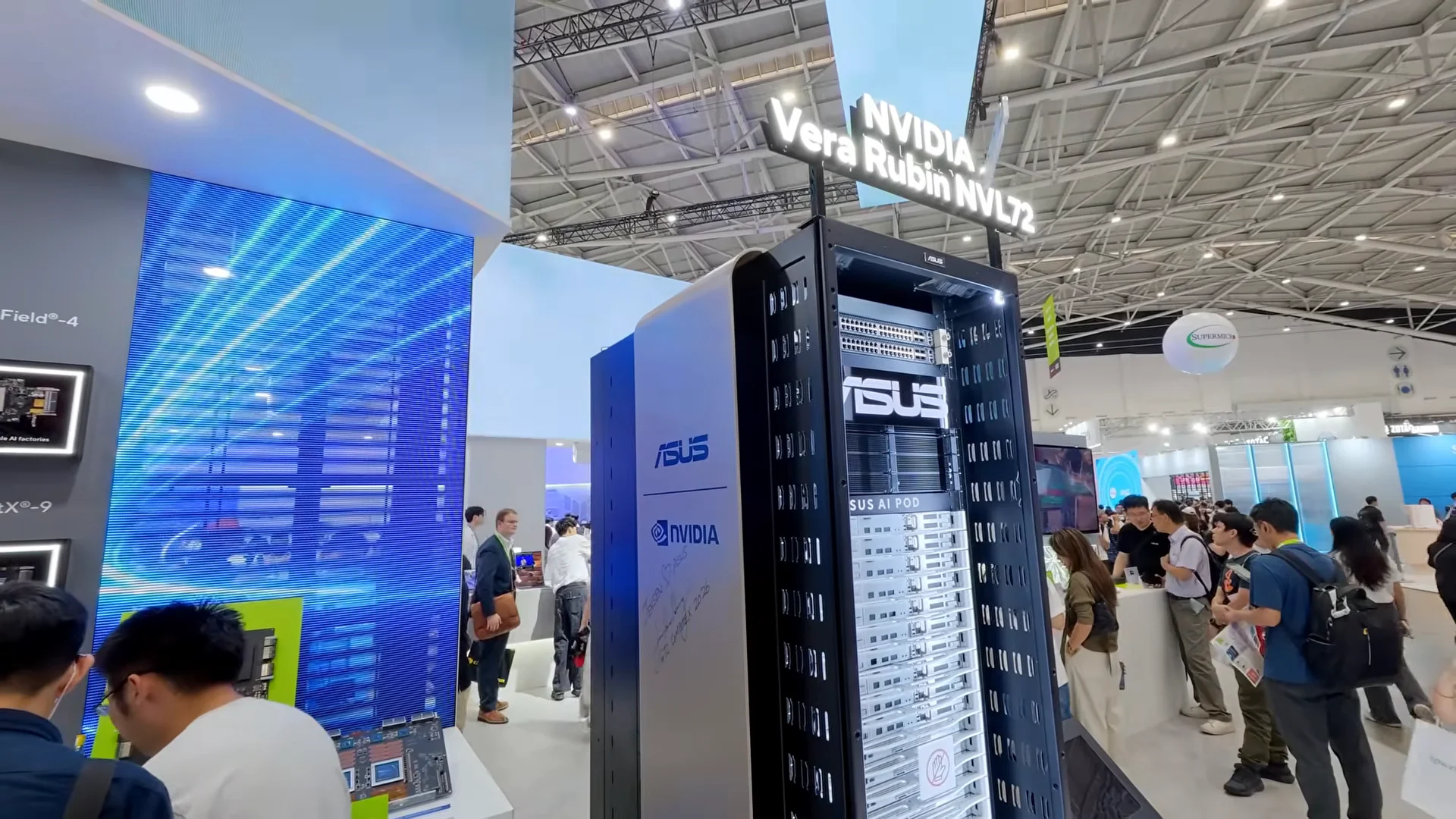 ASUS AI Pod rack alongside Vera Rubin NVL72 signage - the scale of AI infrastructure on the show floor.
NVIDIA’s influence was hard to miss. Their platforms and reference designs were everywhere, and you could feel the ripple effect across the entire show. Most of what vendors were showing followed the same blueprint: local AI machines, AI workstations, AI servers, and now entire data centers - all built around NVIDIA’s platforms.
That made parts of the show feel repetitive. If you saw one GB10-style local AI machine (GB10 is NVIDIA’s GB10 Grace Blackwell Superchip - the same chip inside the DGX Spark) (affiliate link), you started to recognize the same pattern elsewhere. Different cooling, different chassis, different branding - but similar underlying architecture. That’s probably what the first major wave of a new hardware category looks like. NVIDIA provides the reference design, and the rest of the industry races to differentiate around it.
The differences between products are going to matter more than the labels on the booth, and those differences aren’t always obvious from a show floor demo.
NVIDIA’s reference-design effect
NVIDIA isn’t just supplying accelerators anymore. They’re shaping the architecture of the systems being built around them - CPUs, GPUs, DPUs, networking, storage, memory, cooling, racks, software, and orchestration. Vera Rubin systems were visible across multiple vendor booths in different forms. The core platform was consistent; the variation was in how vendors chose to package and differentiate it.
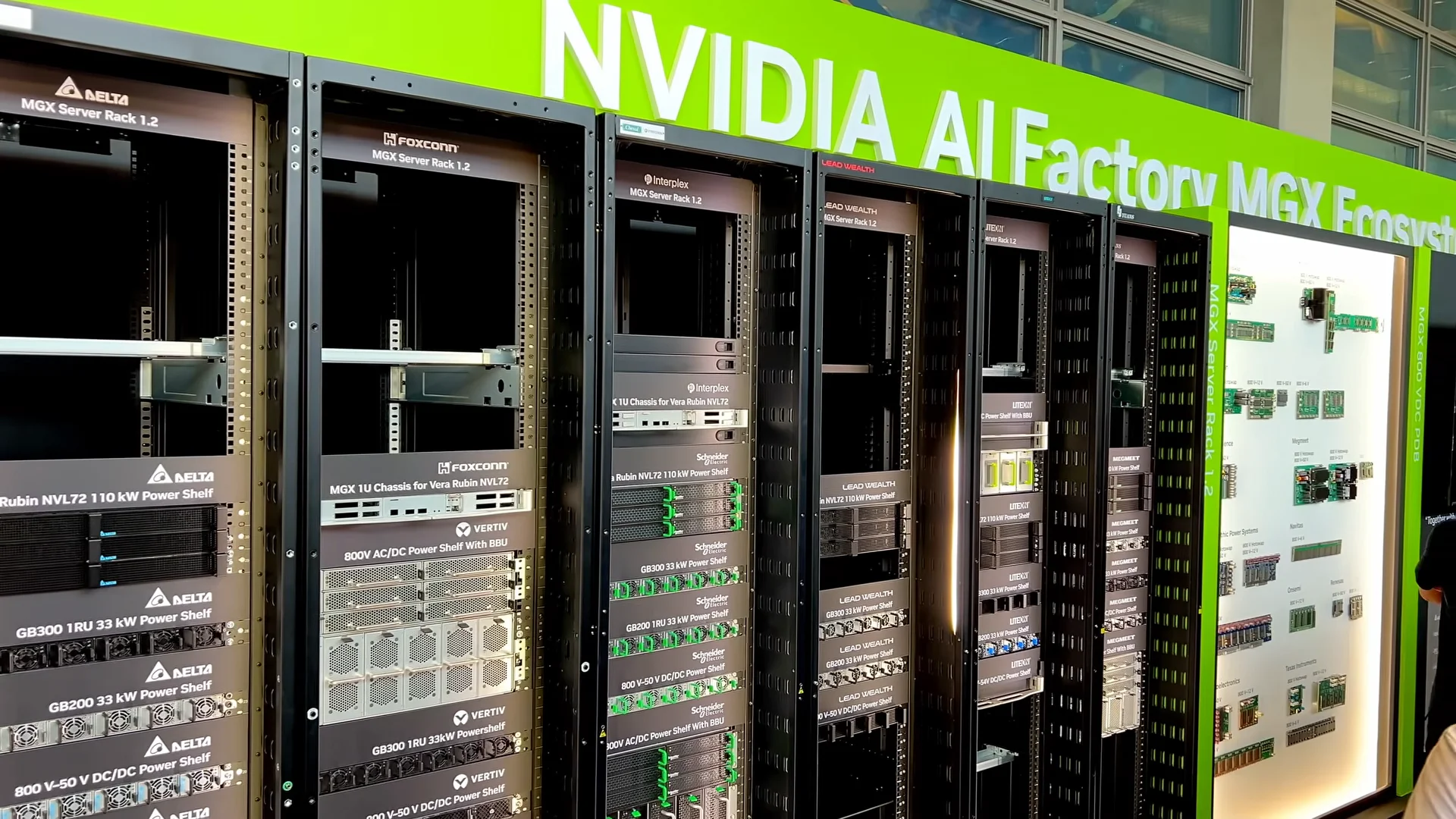 NVIDIA AI Factory MGX Ecosystem - the reference architecture showing up across multiple vendor booths in different forms.
The same pattern appeared with RTX Spark and GB10-style local AI machines. Multiple vendors, similar underlying story, competing on form factor, thermal design, integration, and software.
BlueField and AI storage infrastructure were part of this too. As agentic workflows become more common, the bottleneck shifts from “can I run the model?” to “can I feed the system enough data, move it efficiently, keep as much as possible in context, isolate workloads, and keep the whole thing secure?” That’s where the network and storage side of NVIDIA’s portfolio starts to matter as much as the GPU.
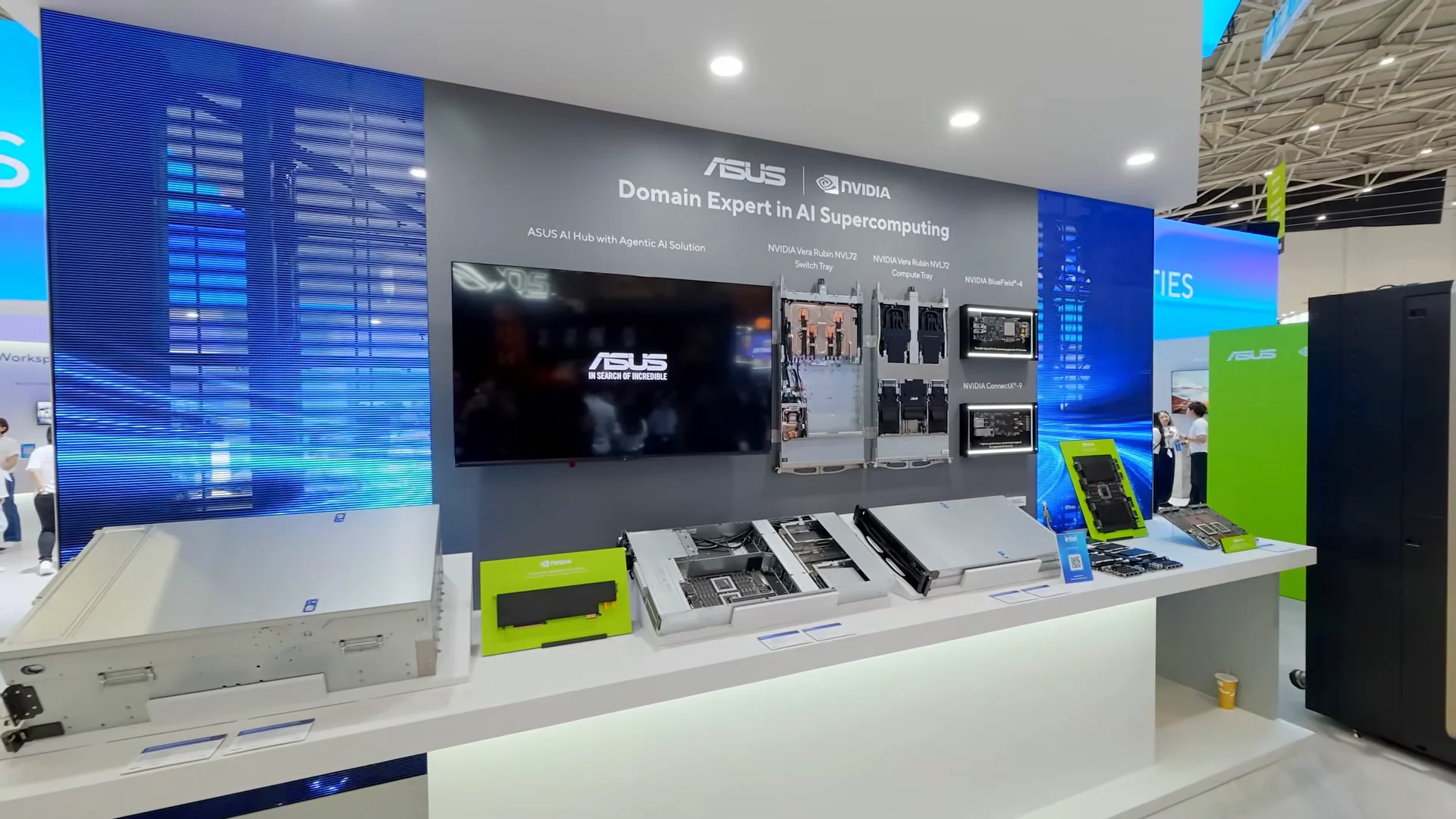 NVIDIA BlueField DPU and ConnectX networking gear - the storage and networking side of the NVIDIA platform stack.
This is becoming a full stack problem. You don’t just buy a GPU anymore. You buy into an ecosystem that spans compute, networking, storage, and software. NVIDIA has made themselves the center of that ecosystem, and it was hard to miss at COMPUTEX.
Local AI hardware still has to prove itself
One of the categories I was most interested in was local AI hardware - RTX Spark, GB10-style systems, and desktop-class machines built around unified memory and CUDA compute.
Serious local AI compute near a desk, available to developers, creators, homelab users, and anyone experimenting with local models. No cloud dependency, no data leaving the machine, real GPU inference at a reasonable scale. That’s compelling and something I have been covering on my channel for a while.
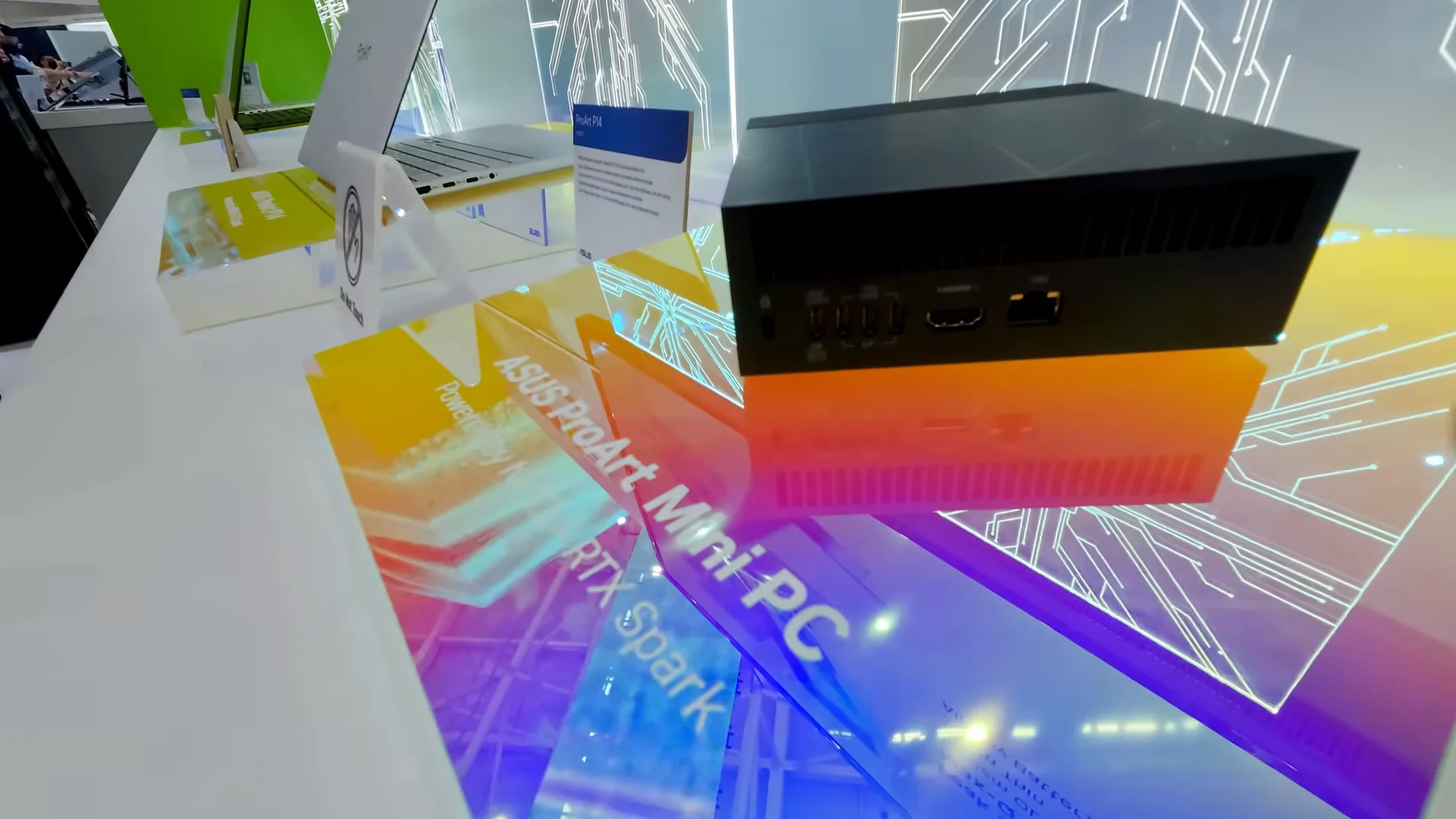 ASUS ProArt Station with RTX Spark - local AI inference aimed at creative professionals.
But I’m still cautiously optimistic rather than convinced.
The GPU side is only part of the story. If these systems are going to be used as workstations, development boxes, creative machines, or local AI nodes, they need to hold up outside a controlled demo. So I’m paying attention to the CPU, memory bandwidth, storage throughput, networking, thermals, driver stability, and software compatibility - not just inference benchmarks.
The unified memory is the part that actually matters for AI workloads. But the question is whether these machines can do double duty: running models and still feeling like a usable workstation day to day. And that depends as much on the ARM-based CPU as it does the GPU - whether it can actually deliver a desktop-class experience for everyday tasks, not just inference.
Show floor demos are controlled environments. We won’t really know until this hardware is in people’s hands.
ASUS has a local AI story
ASUS had a lot going on at COMPUTEX, and their booth was one of the more important stops.
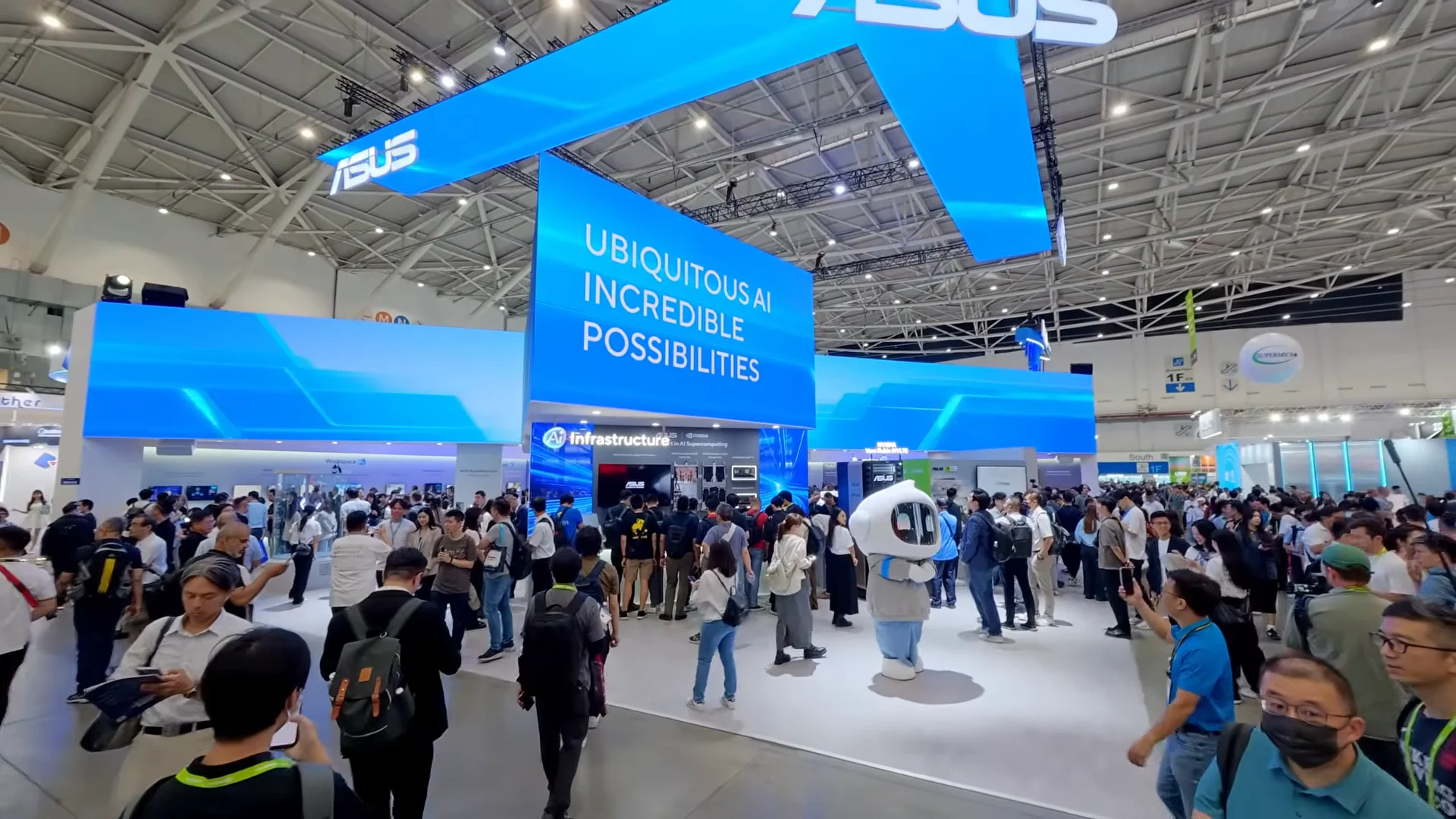 The ASUS booth at COMPUTEX 2026 - AI workstations, servers, networking, gaming, and storage all in one space.
The ProArt RTX Spark system stood out. ProArt has always been ASUS’s answer to professionals who want stability and quality over flash - color accuracy, consistent performance, driver reliability, and hardware that just works day to day. That reputation is the selling point. But the RTX Spark runs Windows on ARM, and Windows on ARM is still maturing. Driver support, app compatibility, and general polish aren’t where they are on x86 yet. The GX10 (affiliate link) (also known as the DGX Spark (affiliate link) / GB10) hasn’t been confirmed for Windows on ARM - it may end up Linux-only, which is a different story entirely for the workstation use case. If ProArt is going to deliver on that promise with this hardware, the software experience has to catch up. It needs to feel like a polished workstation, not a prototype.
The more interesting demo was multiple GX10 systems working together in a coordinated agentic workflow.
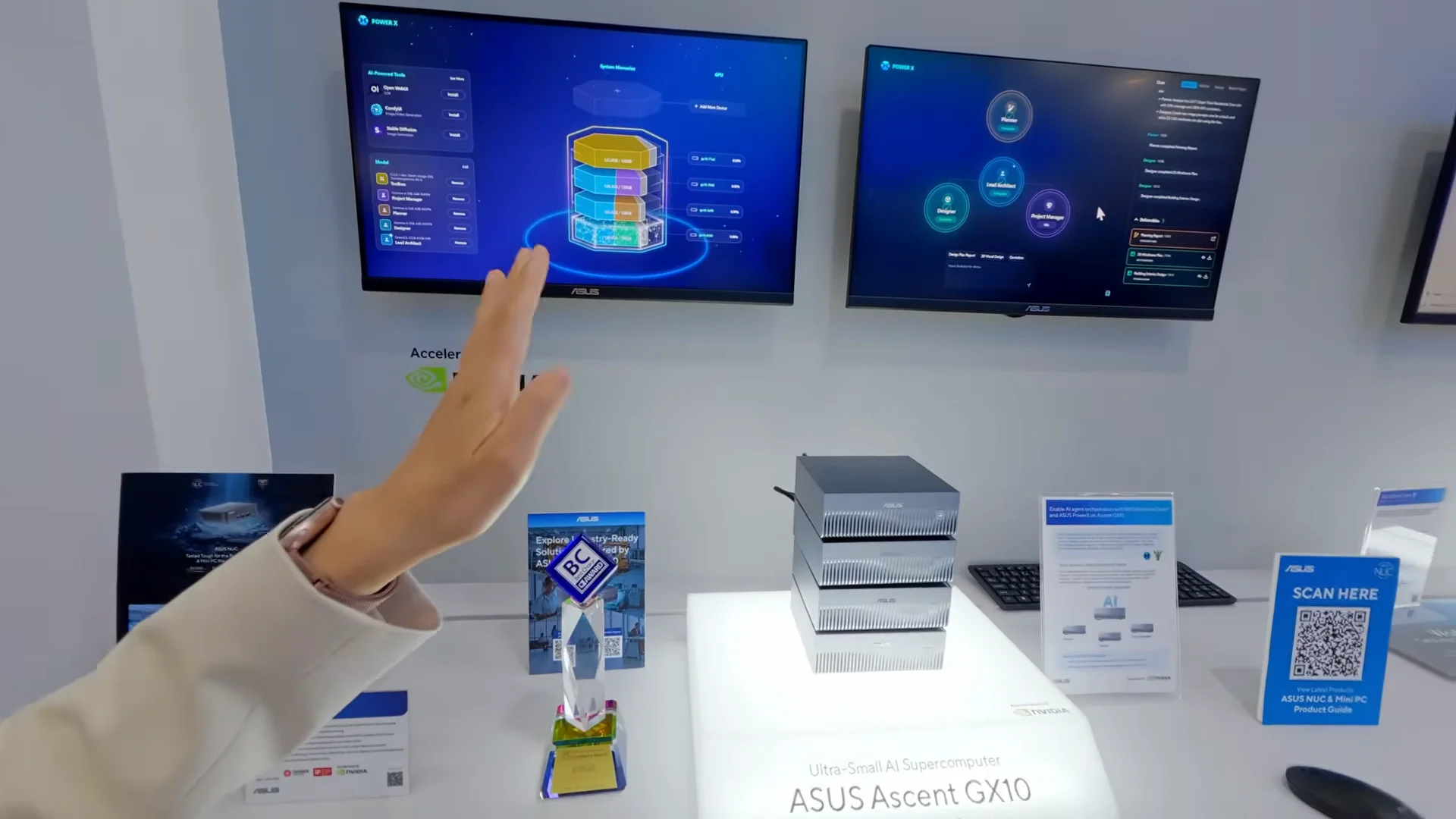 Multiple GX10 units running a coordinated agentic workflow - each machine with a defined role, orchestrated by a planner.
A single local AI machine is interesting. Multiple systems working together, each with a defined role coordinated by a planner, starts to feel like something more practical - a small local AI lab rather than a single inference box. That’s the kind of thing I want to test, because it moves the conversation from “can this run a model?” to “what can I actually build around this?”
I already have two GX10s in my setup, so this wasn’t abstract for me. Seeing ASUS demo coordinated multi-device workflows made me want to dig deeper into what that looks like outside the booth.
ASUS was also talking about agentic workflows more broadly, which connects to a theme I saw across the whole show. I’m still cautious about the term because it gets applied loosely to a wide range of things, but there’s something real there - and it connects to what ASUSTOR was showing nearby.
ASUSTOR was more interesting than expected
ASUSTOR was one of the more surprising booth visits.
At first glance, the focus was on cameras and NAS-based video storage, which makes sense. Their current flagship is the Flashstor 12 Pro (FS6712X), a 12-bay NAS built for high-throughput storage. A NAS is already a local storage device, and storing security camera footage is a natural extension.
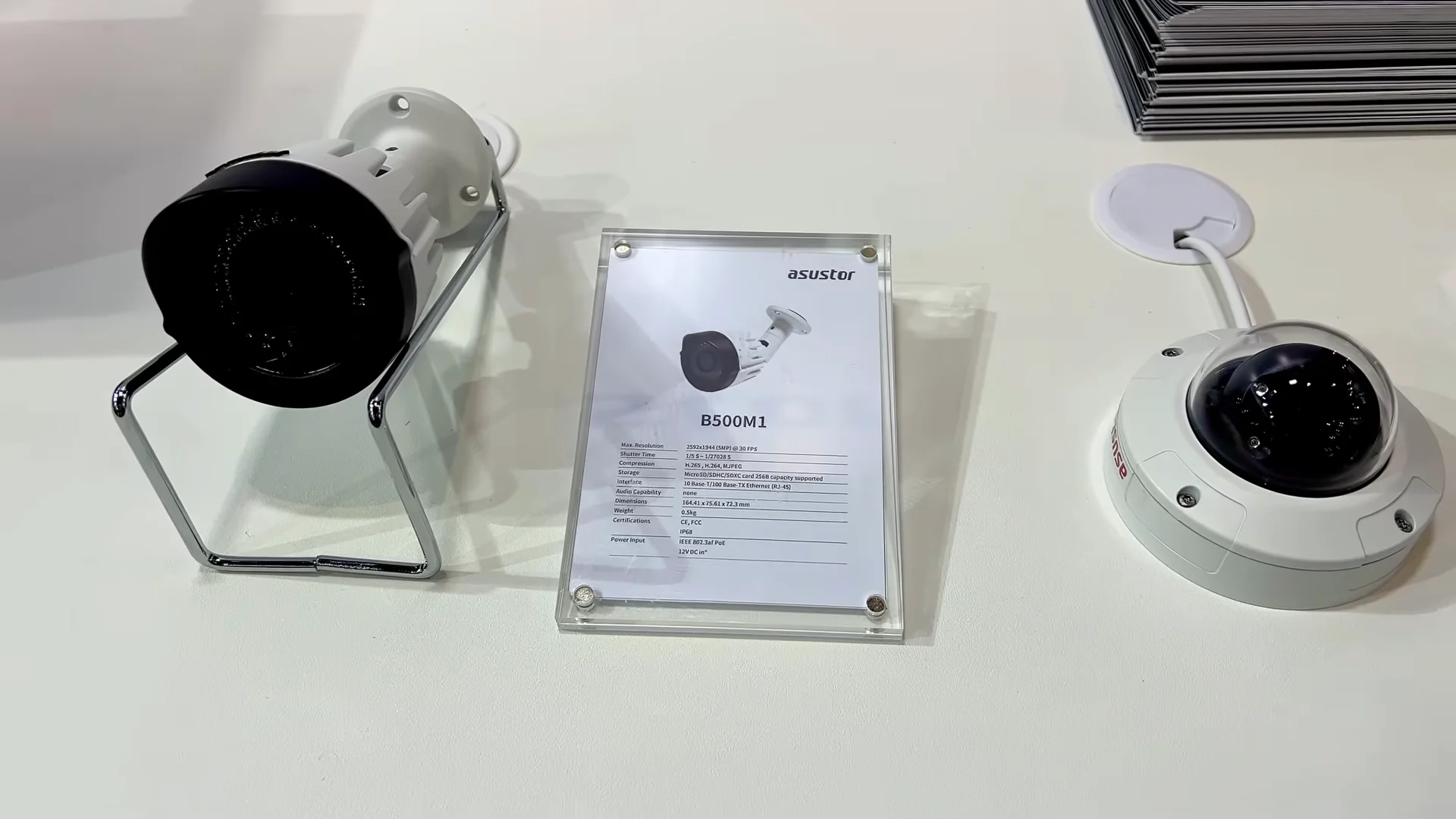 ASUSTOR NAS hardware and IP cameras - local storage as the foundation for a video surveillance and AI workflow.
But there were two things that made the booth more interesting.
First, they were showing a centralized management system for multiple ASUSTOR devices - a central service with agents installed on each NAS. For anyone managing more than one device, that’s useful infrastructure, not just a feature checkbox.
The more interesting part for my use case was the AI agent integration with explicit folder-level scoping.
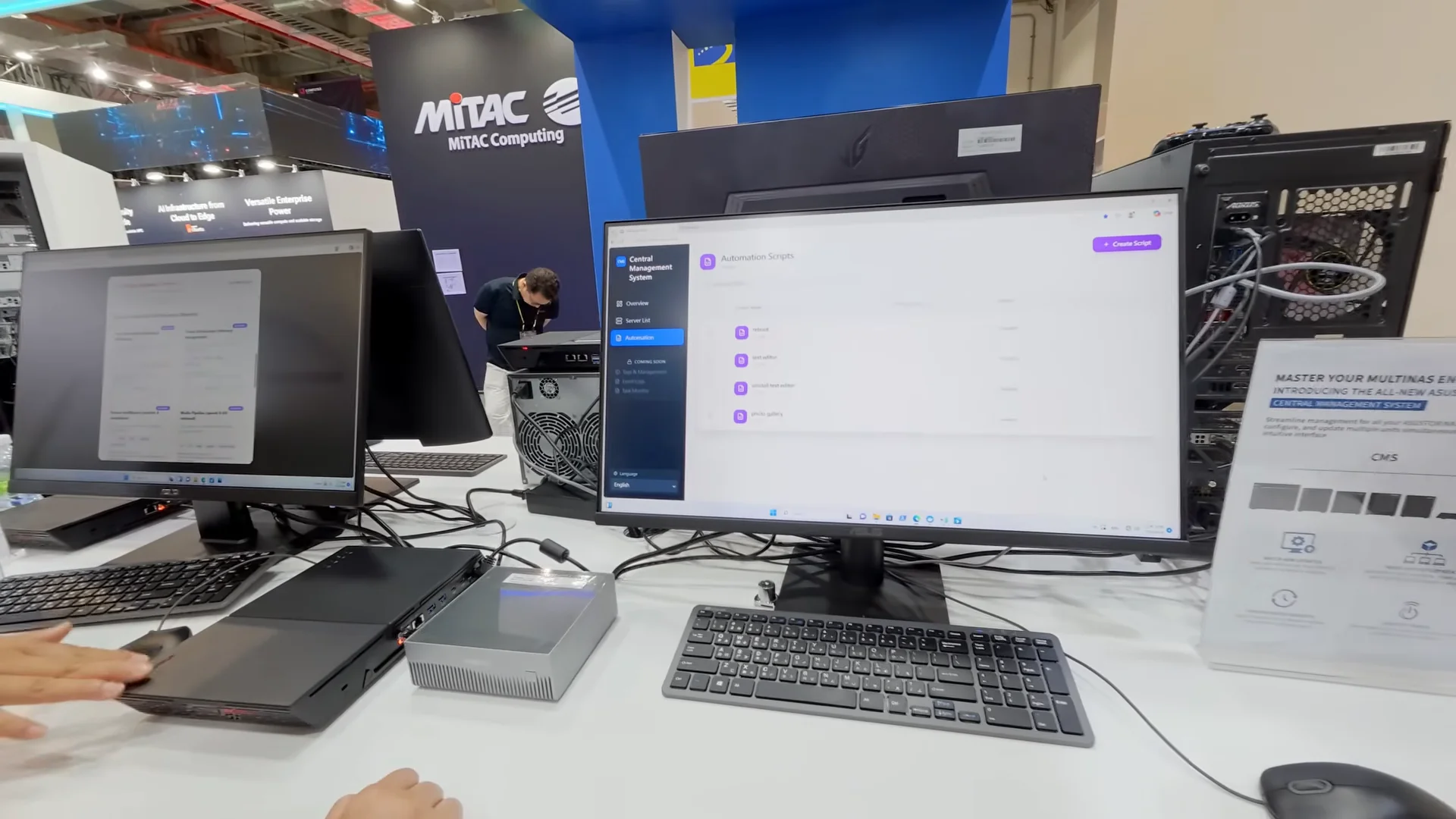 ASUSTOR’s folder-scoped AI agent integration - the agent can only see what you explicitly authorize, not the whole NAS.
The demo showed ASUS Claw and GX10 systems working with data stored on an ASUSTOR NAS, but with agents constrained to specific folders. Not access to the whole NAS - access to what you define.
If AI agents are going to interact with your files, they need clear boundaries. Folder-level scope, explicit permissions, auditability, and straightforward security controls. That’s the kind of AI integration I want to see more of. Not “your agent can see everything,” but “your agent can see exactly what you authorized, and nothing else.”
What I found when I looked past the AI signage
Even though AI dominated the show, I kept hunting for everything else. That’s where some of the more interesting things were.
Mini PCs getting pushed to the edges
Mini PCs are one of the categories I follow most closely. They’re useful for homelabs, edge workloads, lightweight servers, desktops, and experiments. But at COMPUTEX 2026, if a mini PC wasn’t tied to AI or GB10, it was often pushed to the side.
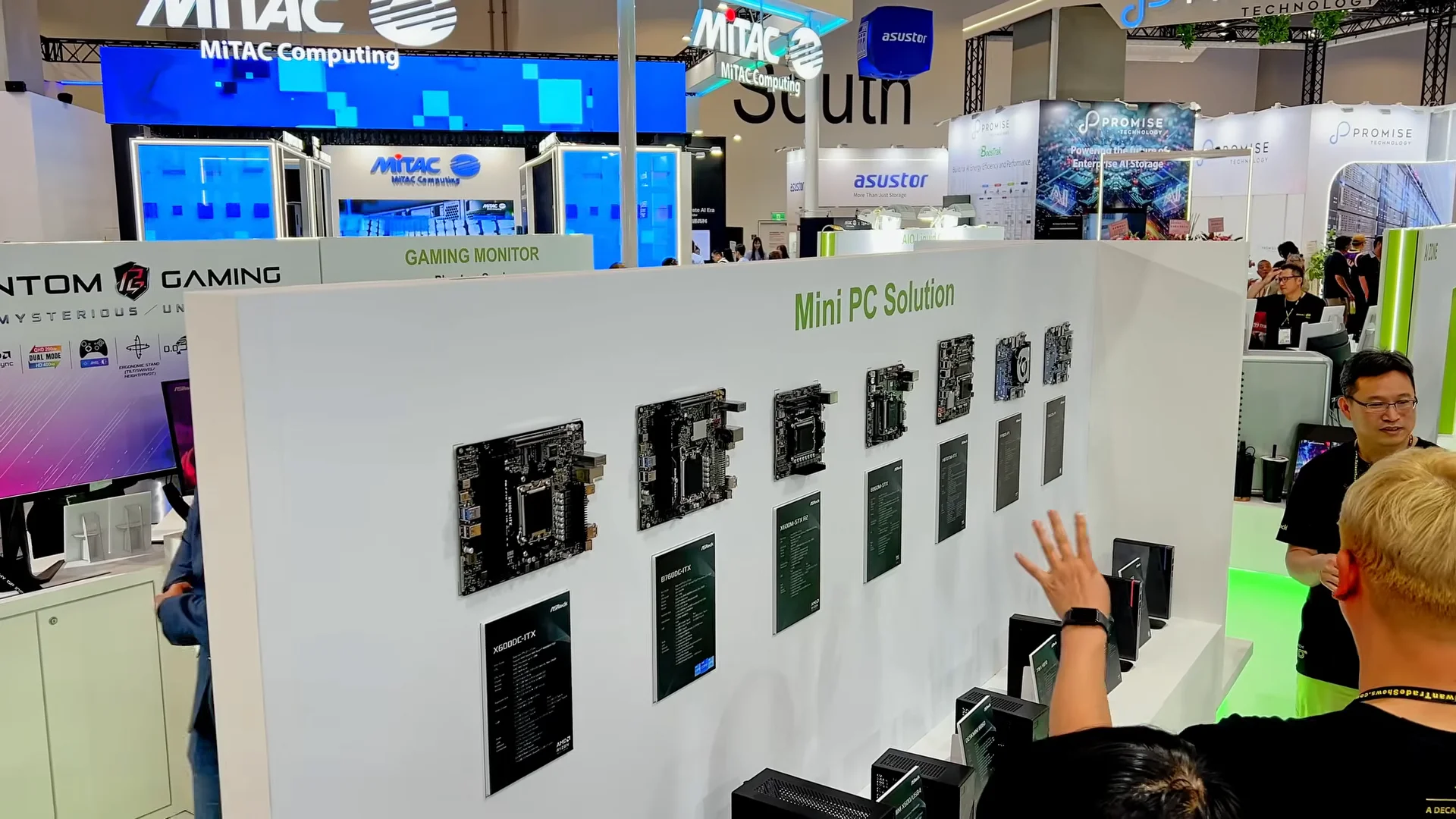 Mini PCs at COMPUTEX 2026 - still there if you looked, but pushed to the edges by the AI hardware.
There were still interesting systems if you looked for them.
ASRock had slim mini PCs that caught my eye - specifically because of the form factor. A lot of N150 mini PCs look nearly identical, and ASRock had something visually different. One was an Intel N150 system in a very thin chassis, and there was an AMD variant that looked more capable on the connectivity side.
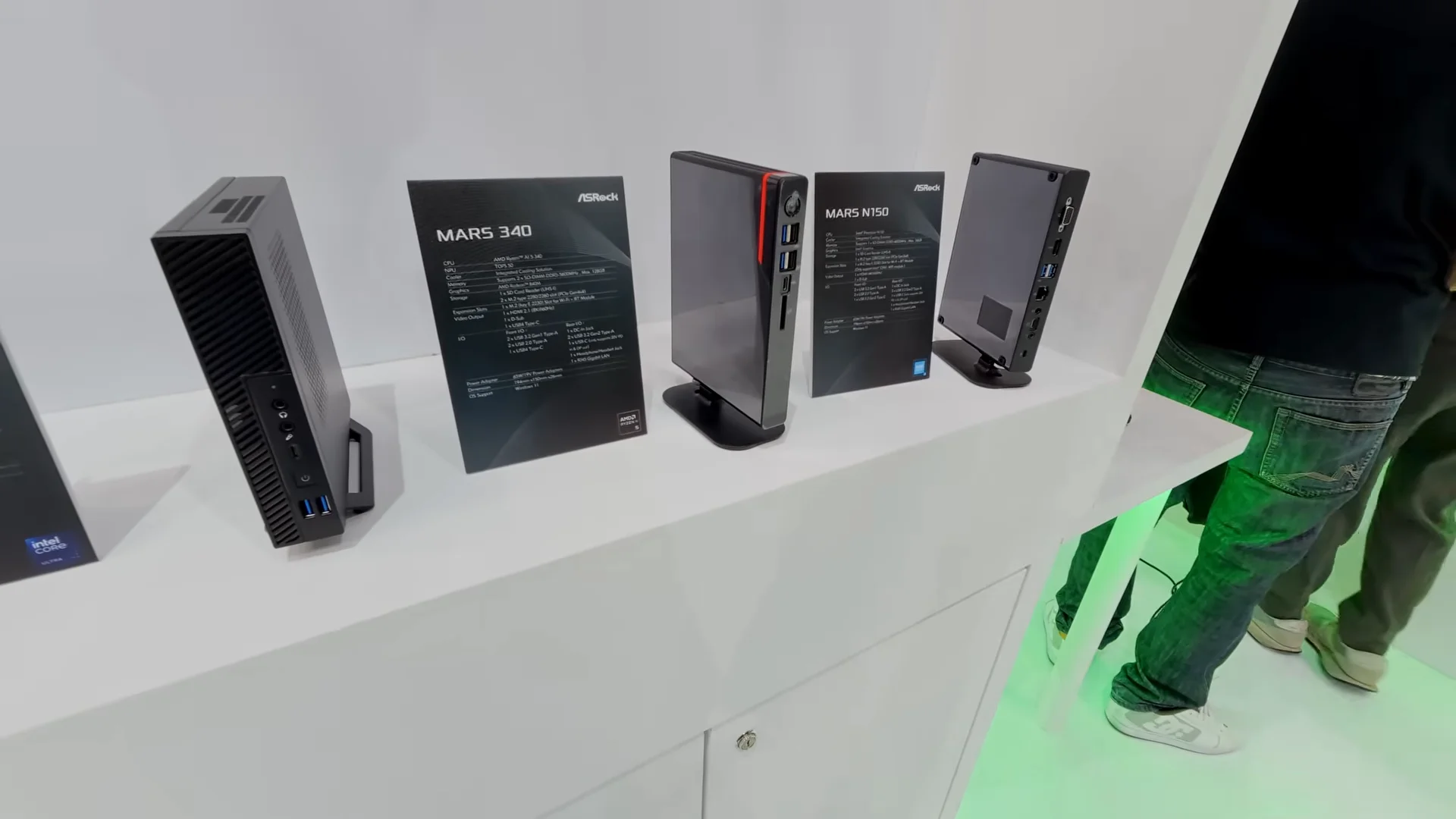 ASRock slim mini PCs - the Intel N150 on the left and an AMD 340 variant on the right, both in a thinner chassis than most.
MINISFORUM was showing AI NAS hardware and the MS-03, which looks like a natural evolution of the MS-01. The MS-01 hit a useful middle ground for homelab users - enough connectivity and expansion to work as a small server without the size and cost of something larger. The MS-03 appeared to continue that direction. Keep an eye on MINISFORUM’s Amazon storefront (affiliate link) for when new products become available.
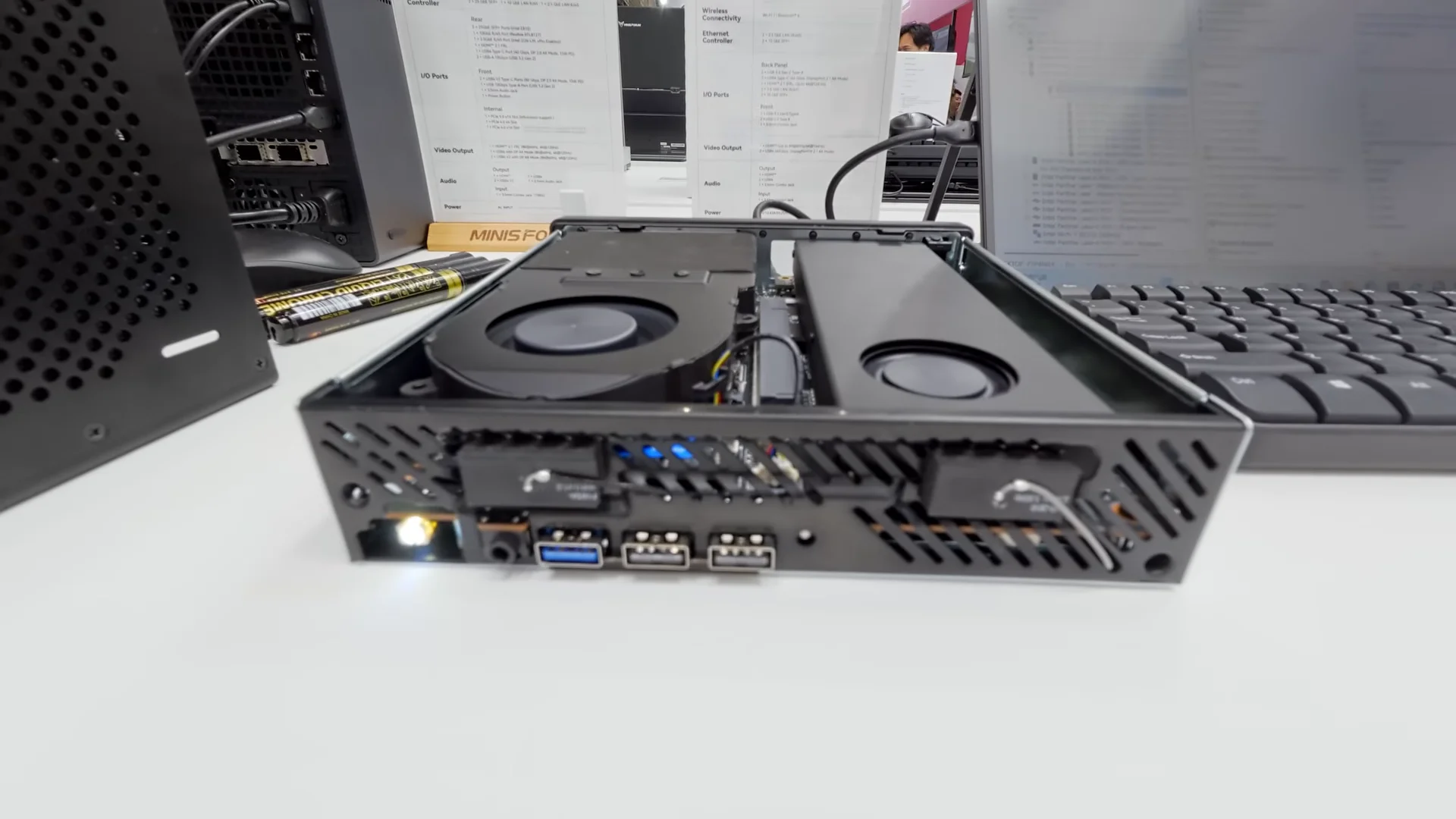 MINISFORUM MS-03 - looks like a natural evolution of the MS-01, carrying forward the small-server form factor.
The MINIX T5000 stood out because it was using NVIDIA Thor instead of GB10. Thor is more associated with robotics and edge AI, so seeing it in a mini PC form factor was unexpected. If it ends up being meaningfully more affordable than GB10-based systems and handles local inference reasonably well, it could be an interesting niche for edge workloads. It isn’t listed on Amazon yet, but MINIX’s Amazon storefront (affiliate link) is where it will show up when it does.
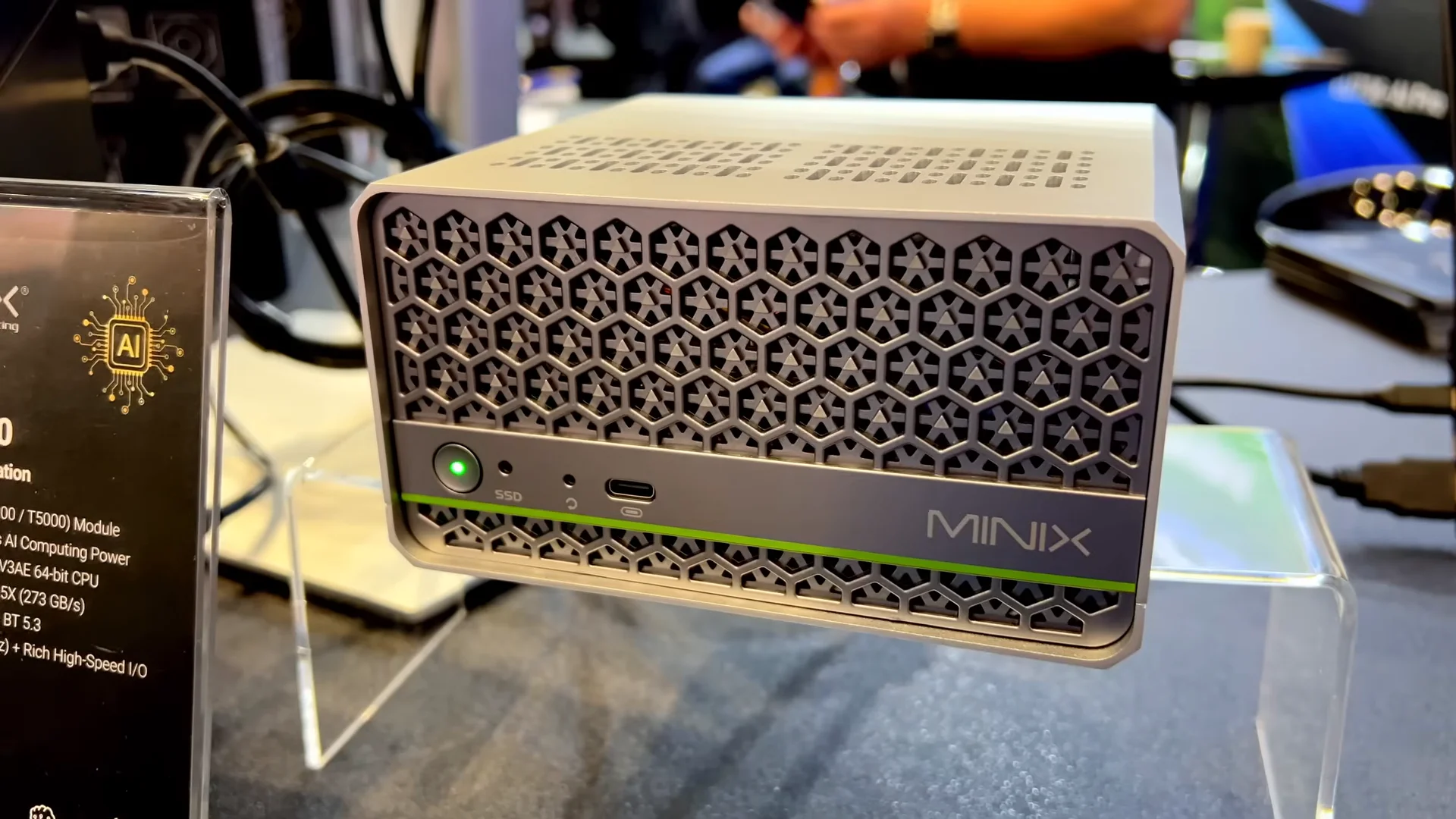 MINIX T5000 with NVIDIA Thor - a robotics-class chip showing up in a mini PC, which wasn’t expected.
Gaming hardware was still there
Even with AI dominating the messaging, there was still plenty of gaming hardware.
The ASUS ROG NUC 16 Edition 20 was worth a look - a high-performance small form factor system with ROG branding on the NUC lineage ASUS took over from Intel. Gaming hardware at COMPUTEX still tends toward the over-the-top end of the spectrum, and the networking hardware was no exception.
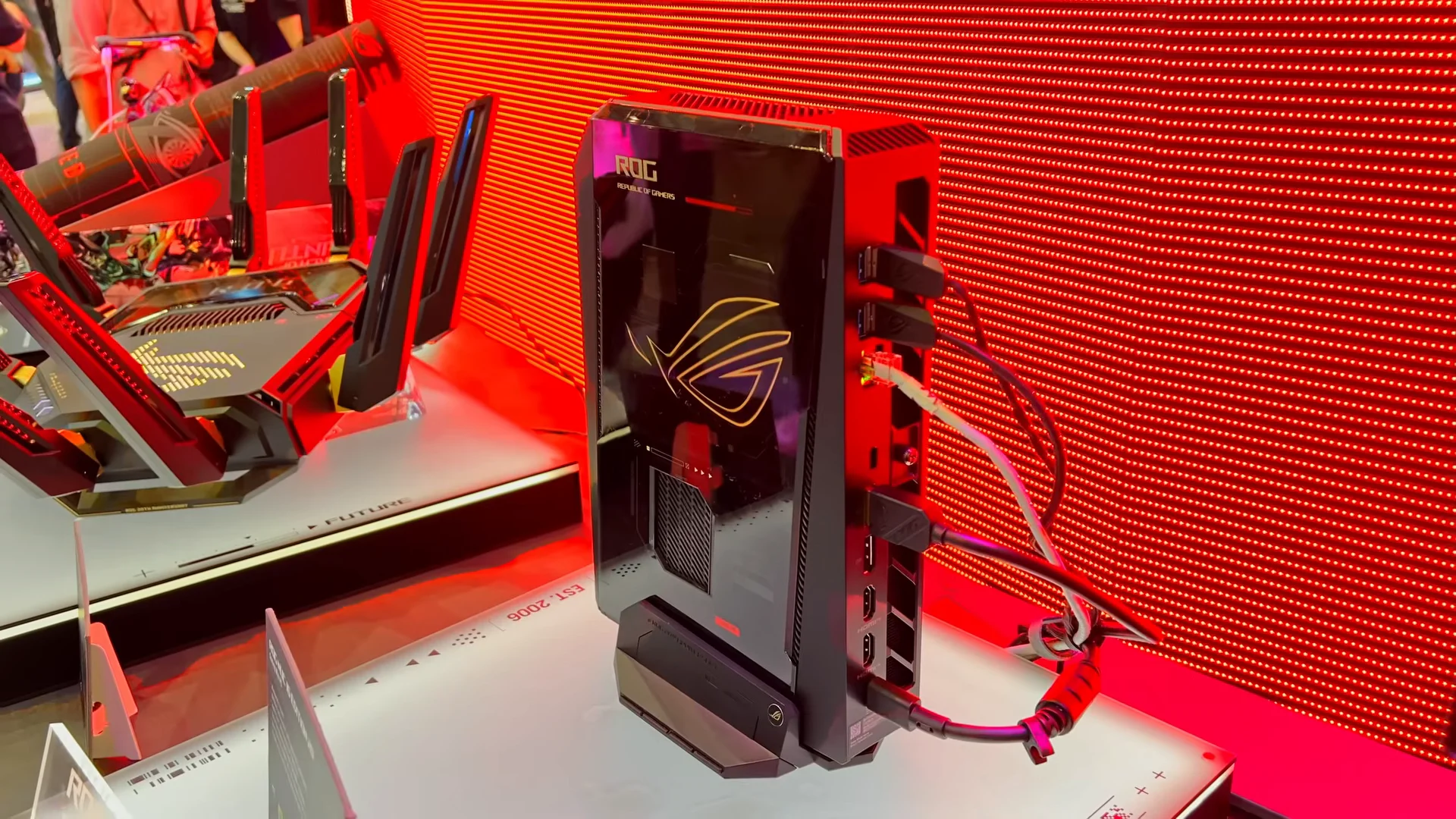 ASUS ROG NUC 16 - high-performance in a small footprint, continuing the NUC lineage ASUS took over from Intel.
The ASUS ROG Rapture GT-BE98 Pro Edition 20 is a router that looks like it belongs on a launch pad. Consumer networking hardware has become overkill, and I mean that in a good way. You can browse ASUS’s current lineup on their Amazon storefront (affiliate link).
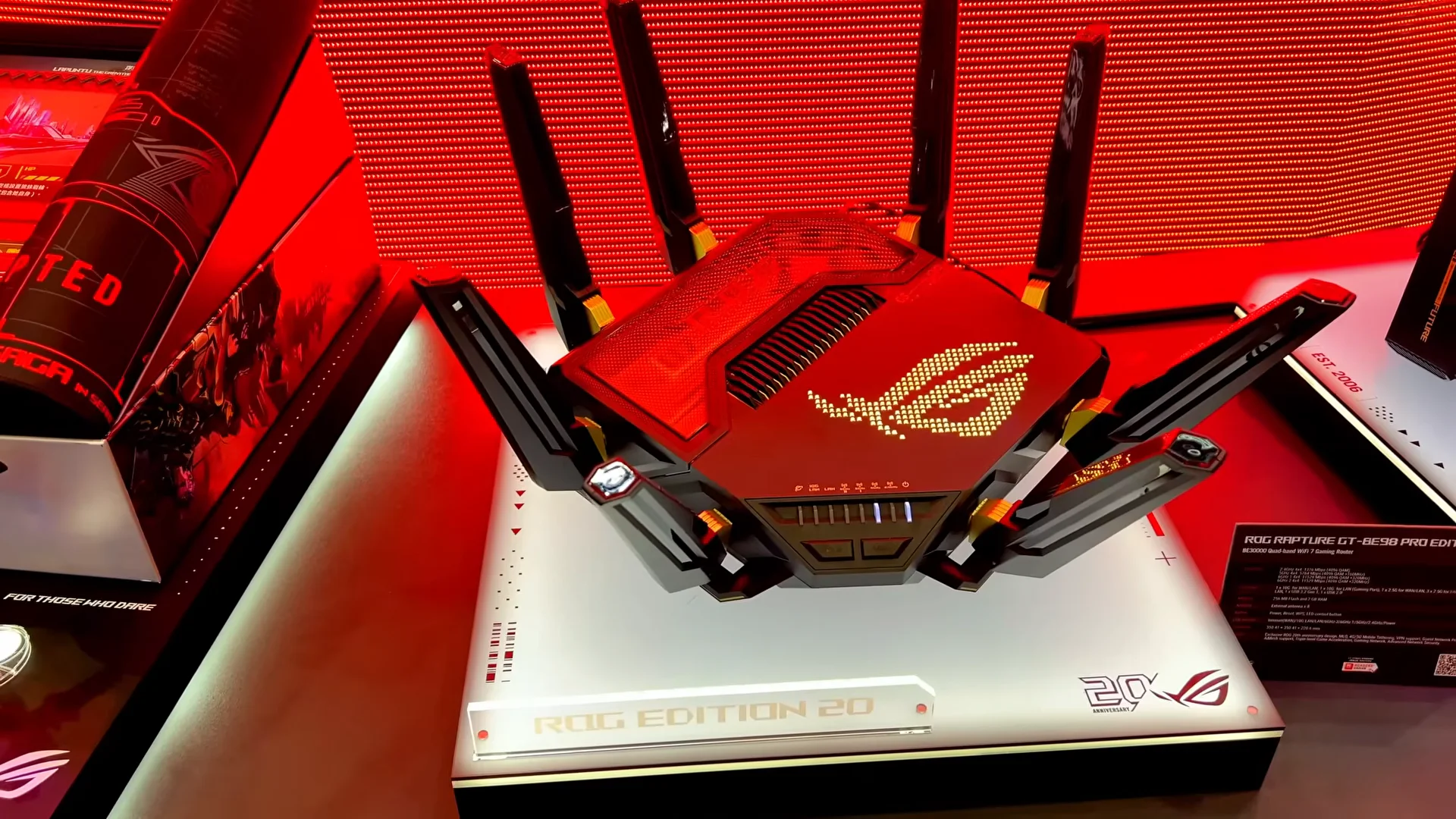 ASUS ROG Rapture GT-BE98 Pro Edition 20 - consumer networking hardware that looks like it belongs on a launch pad.
KVMs at scale were unexpectedly interesting
One of the more unexpected categories was KVMs.
The KVMs I saw weren’t the simple desktop switches most people think of. These were industrial and enterprise systems built for managing dozens or hundreds of machines - with presets, web-based management, zooming, and large-scale control panels.
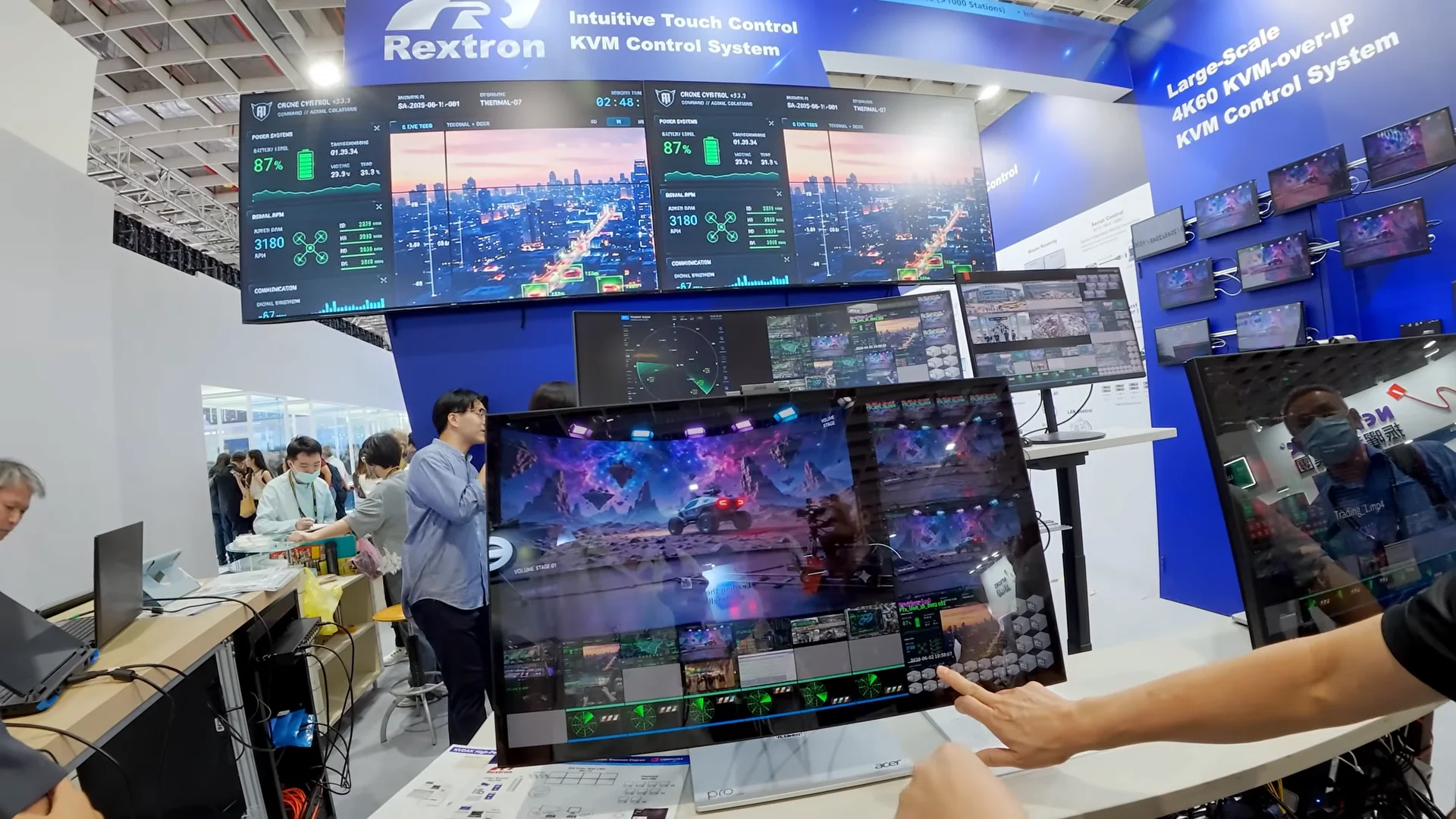 Industrial KVM for managing dozens of machines at once - the kind of hardware you only find if you look past the consumer floor.
For a homelab, that’s overkill. For test benches, labs, manufacturing lines, and data centers, it makes sense. It’s a reminder that COMPUTEX is much broader than consumer product launches. A lot of the most interesting hardware is in the booths you have to look for.
Noctua is an engineering company that makes fans
Noctua was one of my favorite stops, and it reinforced something I already believed: Noctua is not just a fan company.
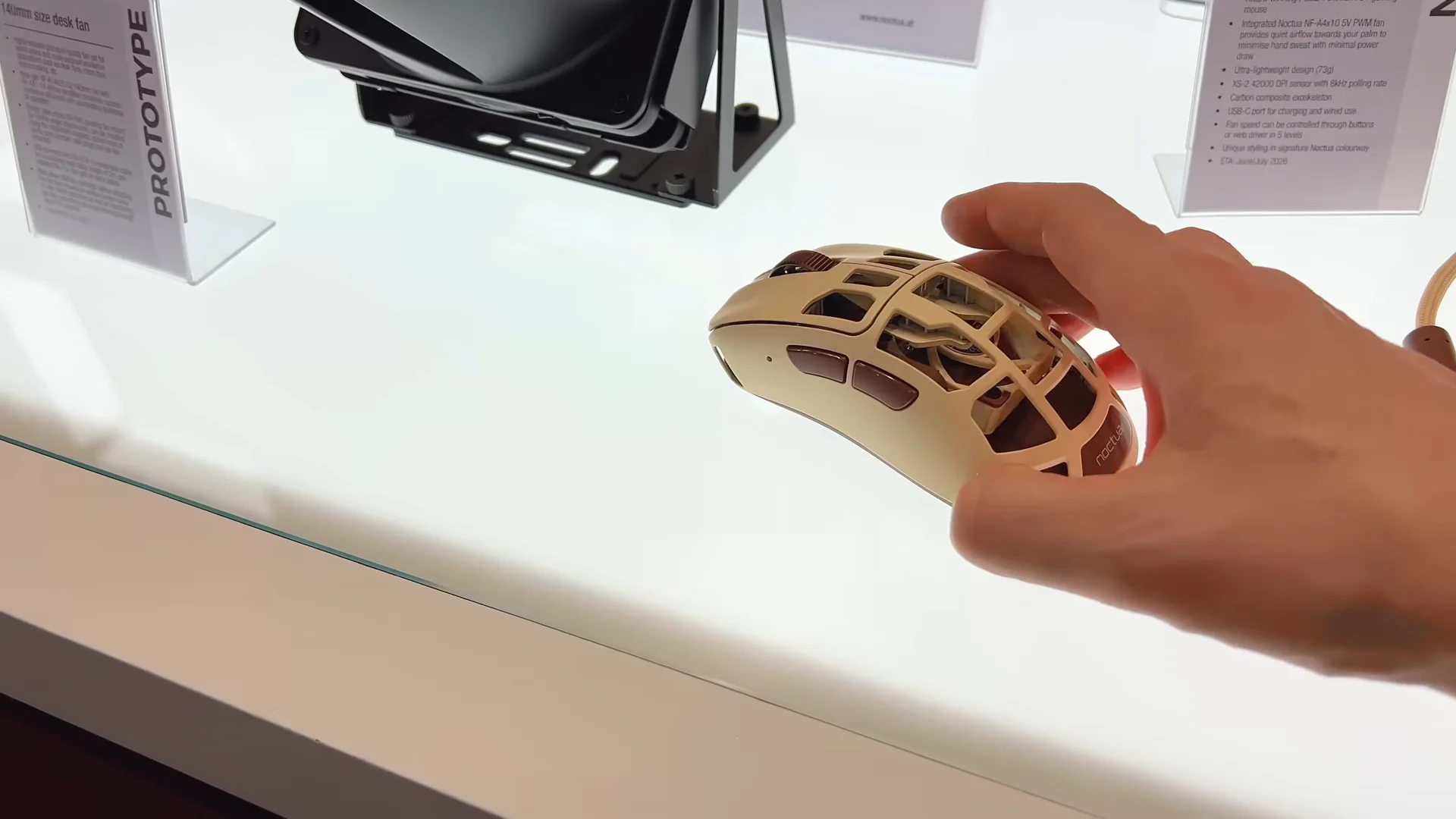 The Noctua booth - fans, water cooling prototypes, B2B collaborations, and a mouse.
They were showing water cooling work, B2B hardware collaborations, and a mouse collaboration. They also had a carbon thermal interface strip as an alternative to thermal paste - the idea being that paste degrades over time, and a solid material can be more consistent in systems that need long-term stability.
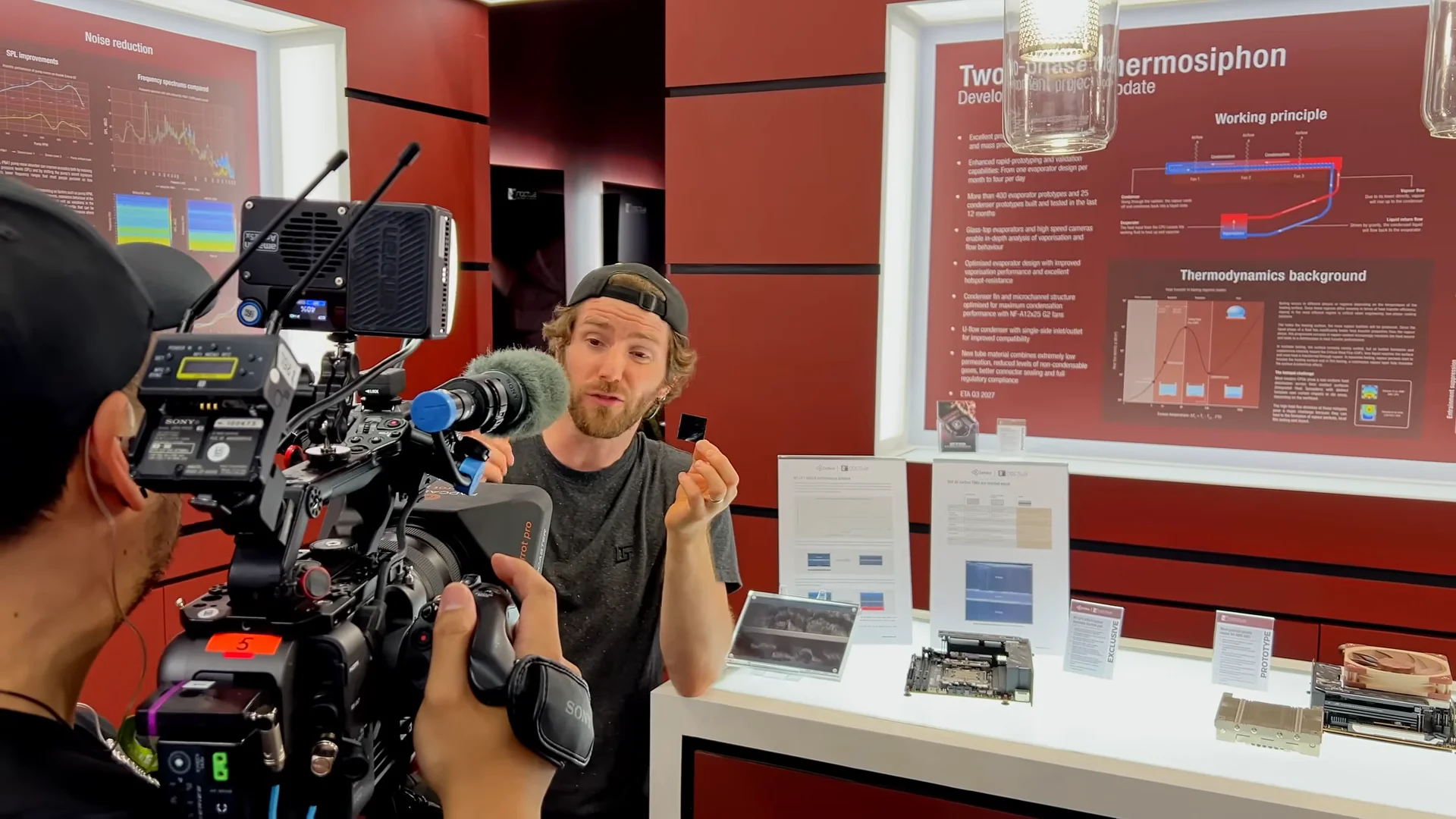 Noctua carbon thermal interface strip - a solid-material alternative to paste for systems that need long-term stability.
And they had 3D printing filament in classic Noctua brown and tan (affiliate link). Completely unnecessary, completely awesome, and completely on brand.
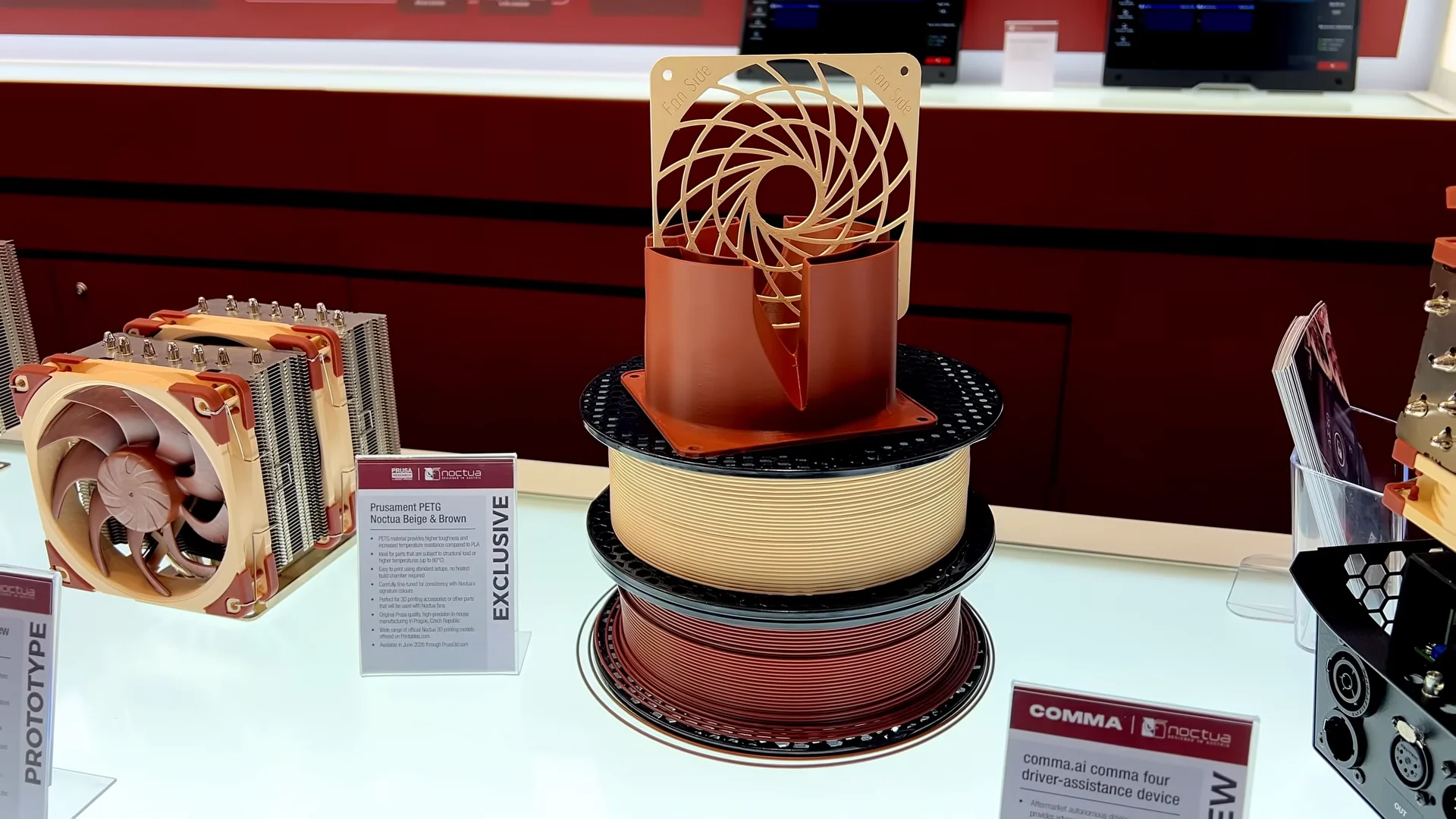 Noctua filament in classic brown and tan. Completely on brand.
Noctua’s branching out, but doing it in a very Noctua way - methodical, clearly thought through, and without abandoning the identity that made them worth following in the first place. You can find their full lineup on Noctua’s Amazon storefront (affiliate link).
Seasonic is preparing for absurd power requirements
Seasonic had a 3200W power supply on display. AI workstations are apparently going to keep pushing power requirements in directions that would have seemed unreasonable a few years ago.
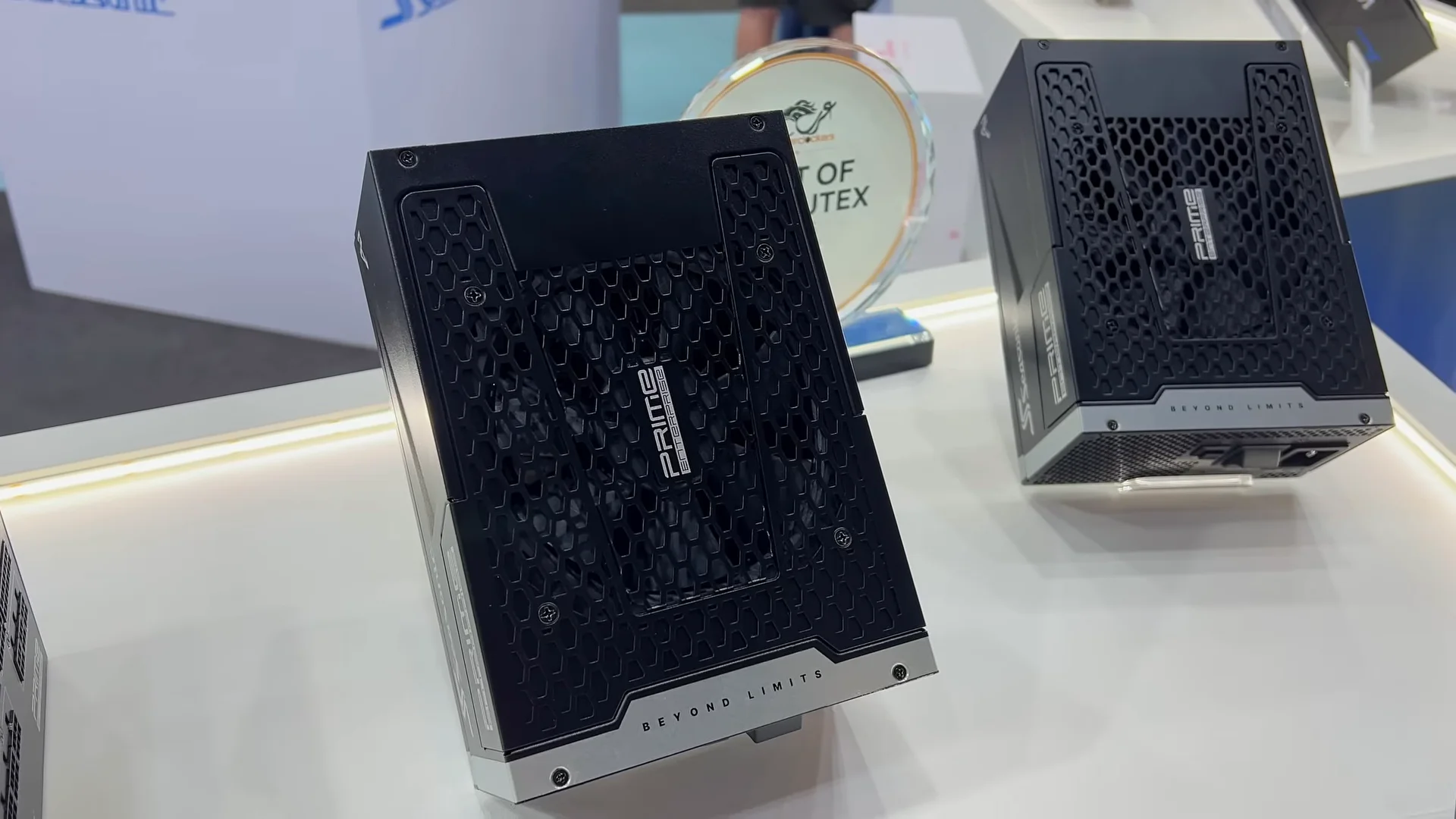 Seasonic 3200W PSU - built for AI workstations that would have looked absurd to power a few years ago.
They also had a Sakura Edition power supply that apparently smells like cherry blossoms when you first open it - a Taiwan-exclusive, which is both a funny product decision and somehow makes me want to see an unboxing video. Their current Noctua collaboration - the Seasonic Prime TX-1600 Noctua Edition (affiliate link) - is worth knowing about if you want that partnership in a PSU you can actually buy today.
The more interesting part was a prototype PSU with diagnostic monitoring over Bluetooth or USB. The protection is still hardware-level inside the unit - the external monitoring is just there so you can see what the supply is actually doing. Useful for debugging high-end workstations as things get more power-hungry. You can browse their current lineup on Seasonic’s Amazon storefront (affiliate link).
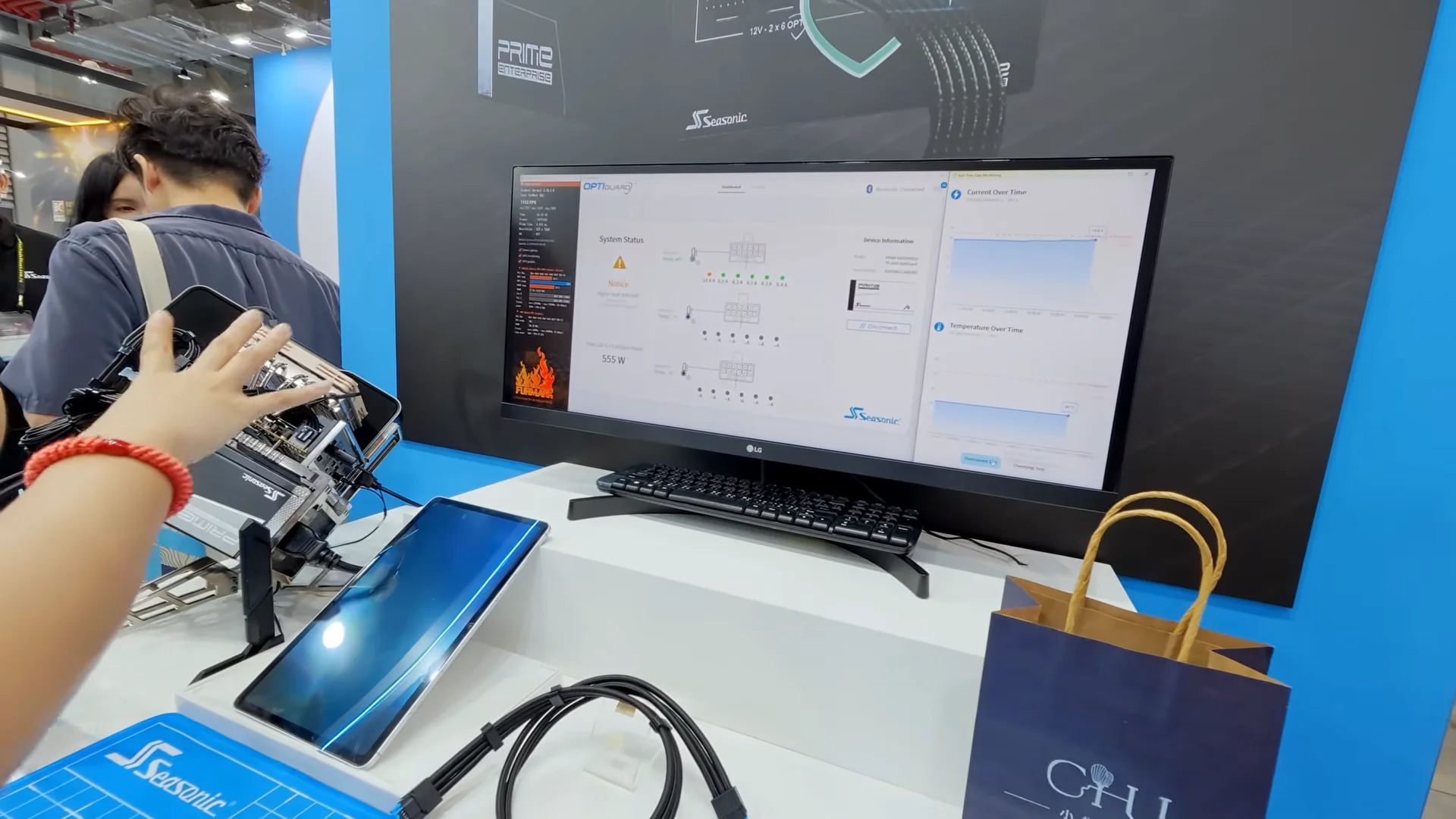 Seasonic’s prototype PSU with a monitoring dashboard - see what the supply is actually doing without giving up hardware-level protection.
Open Source Taiwan was the most refreshing stop
One of the booths I appreciated most was Open Source Taiwan.
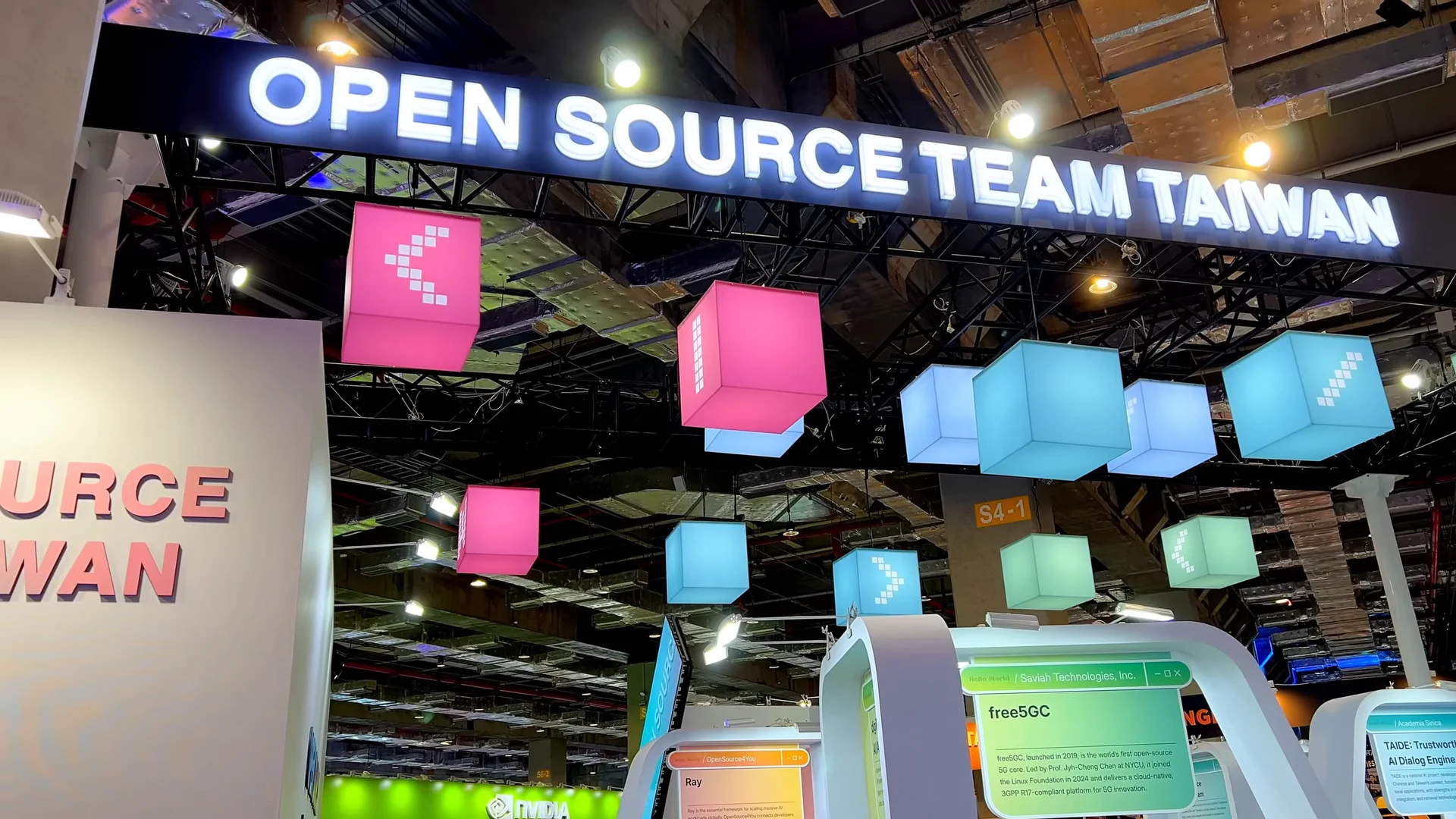 Open Source Taiwan - a community-focused booth in the middle of a hardware show, which was a welcome change of pace.
COMPUTEX is full of hardware, silicon, platforms, enterprise infrastructure, and AI marketing. Finding a booth focused on open source projects, the local developer community, and getting younger developers involved was a genuine change of pace.
As a software engineer, that resonated. A lot of the AI infrastructure on display at COMPUTEX depends on open source somewhere in the stack - frameworks, tooling, orchestration, kubernetes. It was a reminder that even at a massive hardware show, software and community still matter.
Sparkle and the case for practical GPUs
I also stopped by Sparkle, and I’ve got a soft spot for this category: affordable, practical GPUs that solve a specific problem well enough without needing to be a halo product.
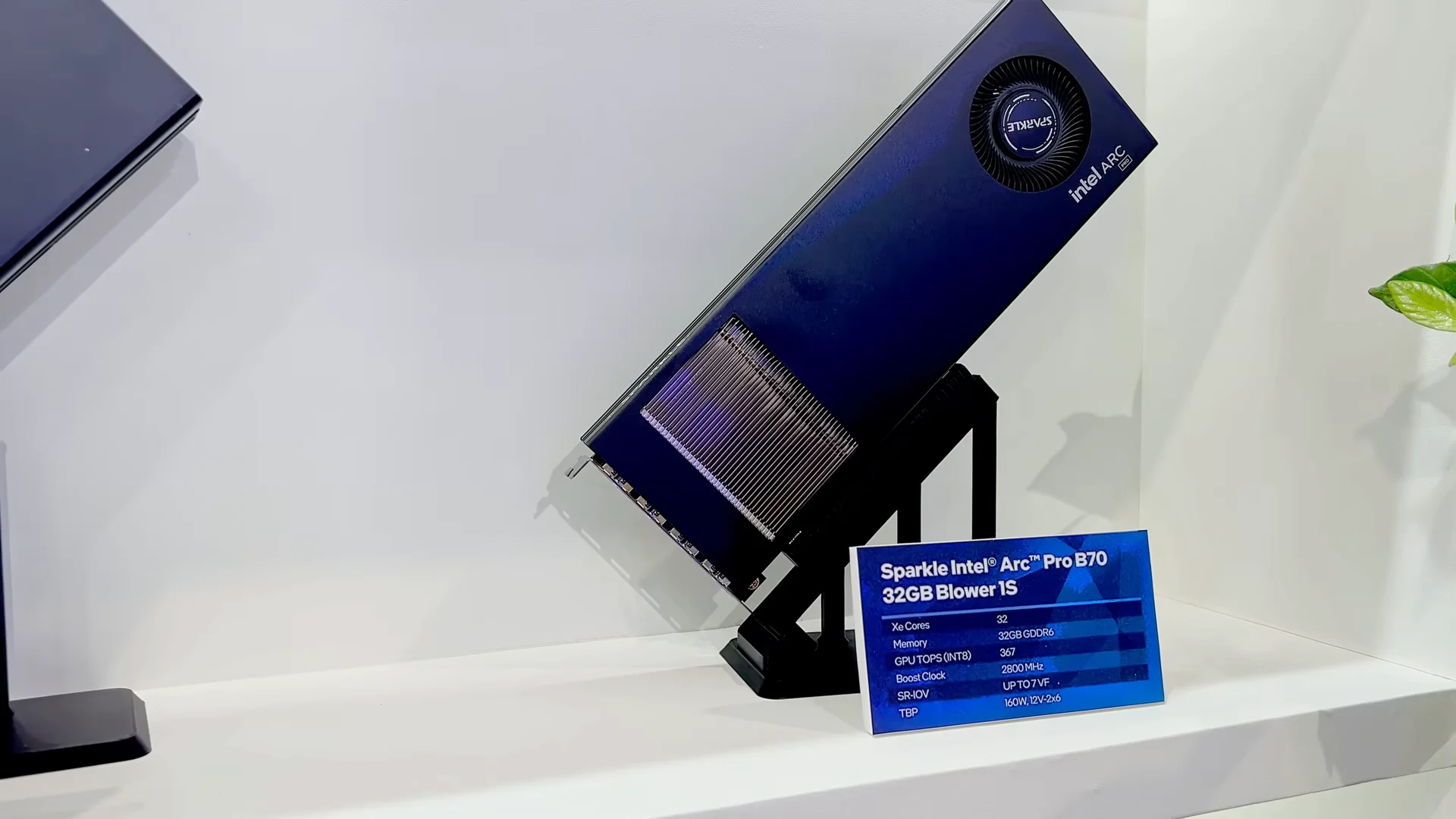 Sparkle Intel Arc Pro B70 - available, power-efficient, and practical for workloads that don’t need the top of the stack.
Sparkle makes Intel GPUs, and their cards can land in a useful space - not the fastest, not the most expensive, but available, power-efficient, and workable for workloads where you don’t need the top of the stack. That kind of hardware is easy to overlook at a show where million-dollar AI racks are getting most of the attention, but it’s relevant to how most people actually build things.
What stood out by category
Here’s how I’d summarize each area.
| Category | What stood out | My take |
|---|---|---|
| AI infrastructure | Vera Rubin, RTX Pro servers, BlueField, AI storage | NVIDIA is driving a full stack infrastructure cycle |
| Local AI | RTX Spark, GB10-style systems, ASUS GX10 multi-device | Promising, but real workflows matter more than demos |
| Mini PCs | ASRock, MINISFORUM, MINIX, ASUS NUC | Still one of the most useful categories for homelab and edge |
| NAS and storage | MINISFORUM AI NAS, ASUSTOR, Claw and folder-scoped agents | NAS vendors are becoming local data and compute platforms |
| Cooling | Noctua thermal materials, water cooling, collaborations | Noctua is branching out without losing its identity |
| Power | Seasonic 3200W PSU and monitoring prototypes | AI workstations are pushing power into strange territory |
| Infrastructure | KVMs, industrial systems, manufacturing tools | COMPUTEX is much broader than consumer product launches |
| Community | Open Source Taiwan, NVIDIA Startups | A needed reminder that software and community still matter |
My biggest takeaway
COMPUTEX 2026 was both overwhelming and a little underwhelming at the same time.
Overwhelming because of the scale - there’s more to see than you can realistically cover, especially on a first visit. Underwhelming because so much of the industry is currently telling the same AI story. If you’re interested in AI infrastructure, AI servers, AI workstations, and AI data center hardware, there was a lot to dig into. If you were looking for something outside that wave, you had to work harder to find it.
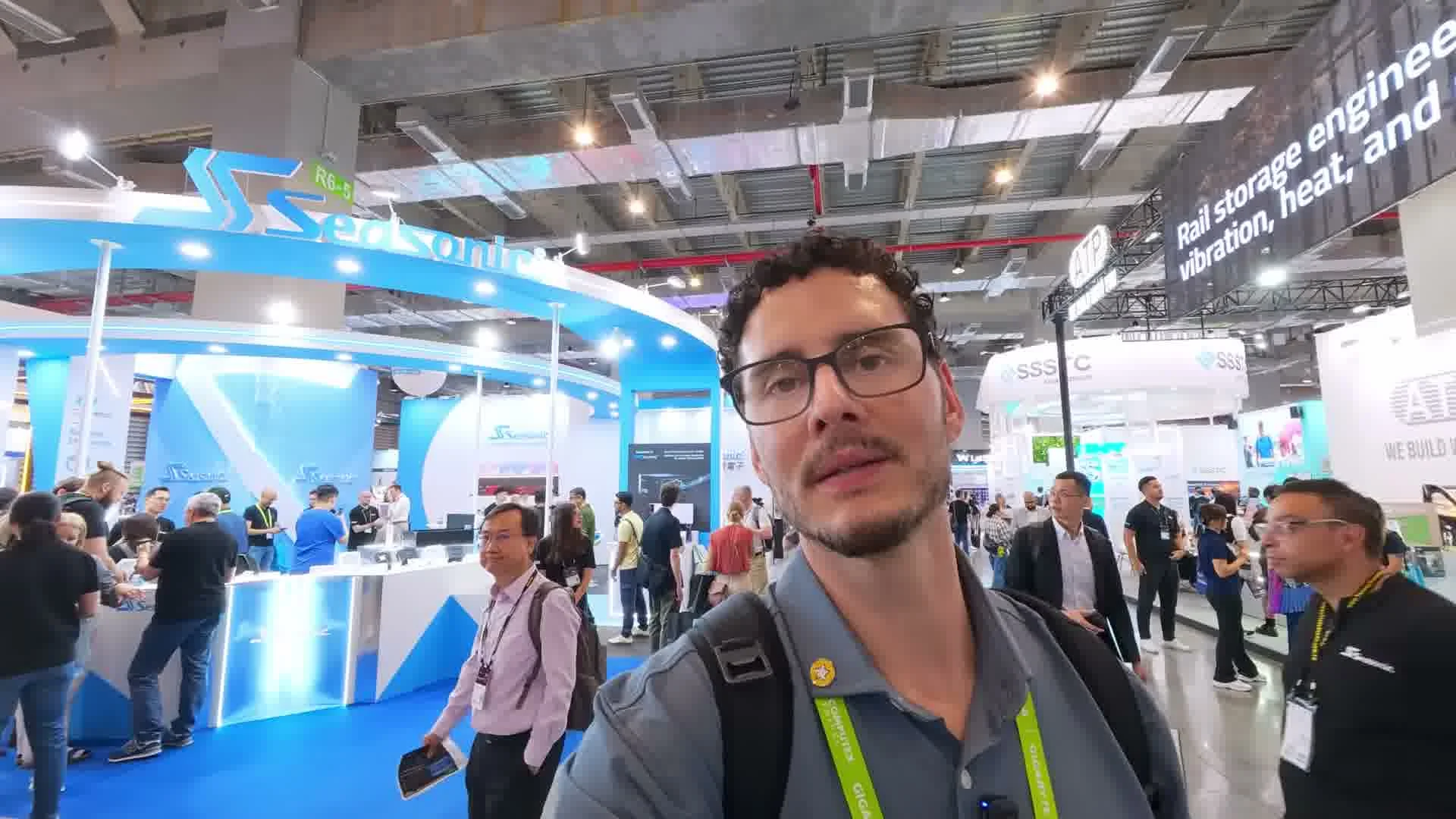 Walking the show floor at Nangang - the Seasonic booth, one of hundreds of stops across multiple buildings.
For me, the most interesting parts were where the AI story connected back to practical questions.
Can a local AI machine hold up as a real workstation, not just a demo? Can a NAS expose data to agents without opening everything up? Can the infrastructure underneath all of this actually scale without becoming impossible to power and cool?
Those are the questions I left with. The hard part is figuring out what still matters once you filter out the noise.
Disclosure: ASUS helped cover travel for my COMPUTEX visit. They did not sponsor this post or video and had no editorial input into either.
🤝 Support the channel and help keep this site ad-free
⚙️ See all the hardware I recommend at https://l.technotim.com/gear